
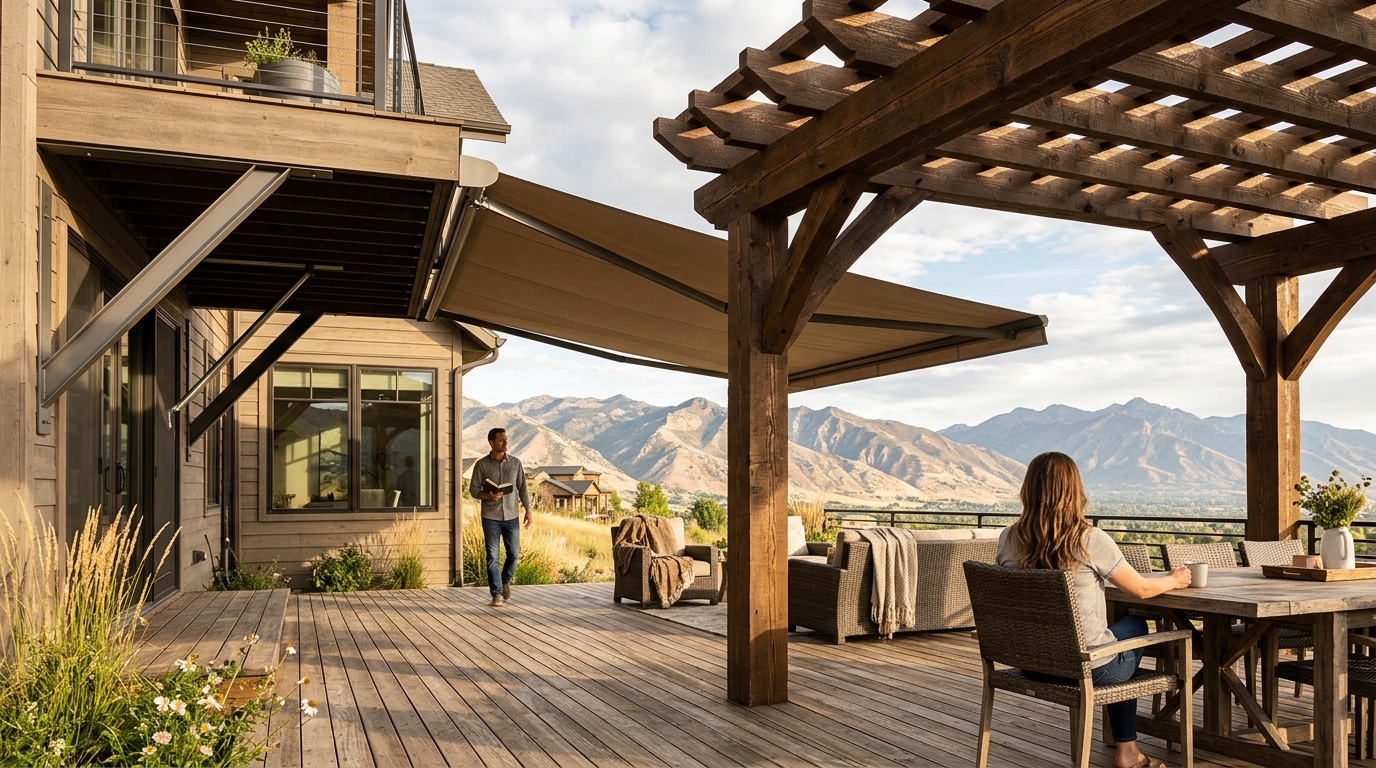
Utah homeowners face unique weather challenges that demand smart outdoor design. According to the National Weather Service, the Intermountain West experiences high UV index levels and sudden summer thunderstorms that can ruin outdoor gatherings. Choosing the right overhead structure is not just about aesthetics. It is about protecting your investment and extending your usable living space. We will break down the functional differences between pergolas, awnings, and cantilever covers to help you decide.
Understanding Structural Design and Support
The fundamental difference between these three options lies in how they are supported and how they attach to your home or deck. Each structure serves a different architectural purpose.
The Pergola: A Permanent Architectural Feature
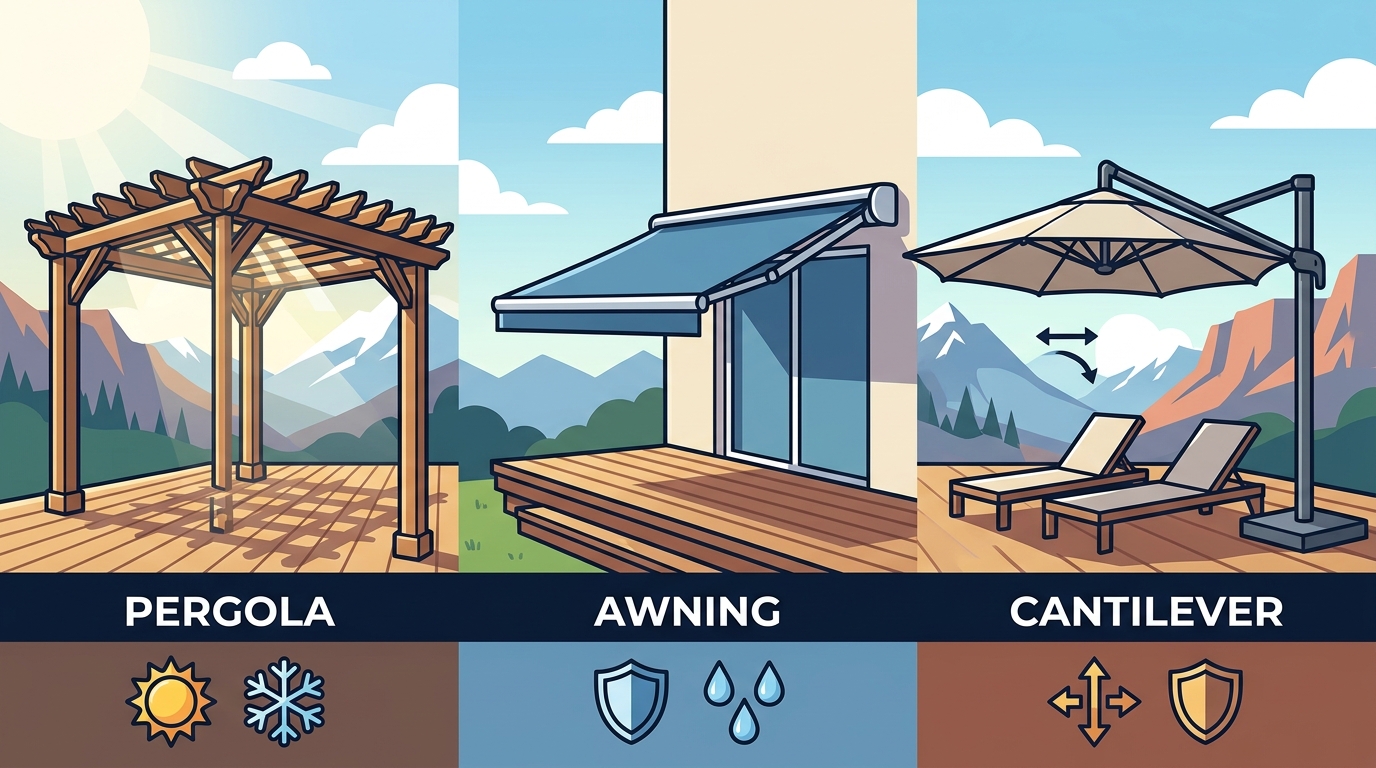
A pergola is an open-roof structure consisting of columns supporting cross-beams and a lattice. Pergola is a permanent outdoor framework that provides partial shade and defines a specific area of your deck. Unlike solid covers, pergolas allow sunlight and air to filter through. This makes them ideal for Utah climates where you want to enjoy the sun without the intense heat. They are typically built from wood or composite materials and can be attached to your home or stand freestanding. At Utah Decks, we specialize in custom carpentry that integrates seamlessly with your home's existing architecture.
The Awning: A Wall-Mounted Shield
An awning is a secondary covering attached to the exterior wall of a building. Awning is a fabric or metal canopy that extends from a wall to provide shade or shelter. They are excellent for covering sliding glass doors or windows that lead directly to your deck. Awnings are generally less expensive than full deck structures but offer limited coverage area. They are best suited for protecting specific entry points rather than the entire outdoor entertaining space.
The Cantilever Cover: Overhanging Freedom
A cantilever cover is a rigid structure that extends outward from a support point without intermediate columns in the middle of the span. Cantilever cover is a structural design that allows an overhang to extend beyond its support base. This creates a column-free zone, which is critical for maintaining an unobstructed view of the Utah landscape. Unlike traditional pergolas that require posts at every corner, cantilever designs use a single or dual support system to hold the roof out over the deck. This is particularly useful for decks that are already built and cannot be easily modified with new posts.
Shade Quality and UV Protection
Utah receives over 300 days of sunshine annually. Effective shade is not a luxury. It is a health necessity for outdoor living.
Pergola Shade Dynamics
Pergolas offer dappled shade. The amount of sun exposure depends on the spacing of the rafters and whether you add a retractable canopy or climbing vines. In the summer, when the sun is high, a pergola provides significant relief. In the winter, when the sun is lower, it allows warmth to penetrate your deck. This seasonal adaptability makes it a favorite for year-round use.
Awning Shade Consistency
Awnings provide consistent, solid shade over the area they cover. If you choose a fabric awning, you can select specific UV-blocking materials. However, the shade is fixed to the wall. You cannot move the shade across the deck. If the sun moves away from the awning's projection, that part of your deck becomes exposed to direct heat.
Cantilever Shade Coverage
Cantilever covers typically feature solid or louvered roofs that provide full coverage. Because they extend outward, they can shade a larger portion of the deck than a standard awning. The shade is uniform across the covered area. This is ideal for dining or lounging where you want complete protection from the harsh Utah sun. Utah Decks uses high-quality materials that resist fading and warping under intense UV exposure.
Weather Resistance and Durability
Utah weather is not just sunny. It includes high winds, heavy snow in the mountains, and sudden hail. Your deck cover must withstand these elements.
Pergola Durability
Wood pergolas require regular staining and sealing to prevent rot and insect damage. Composite pergolas offer higher durability with less maintenance. The open design allows snow and rain to pass through, reducing wind load. This makes them safer in high-wind areas compared to solid roofs.
Awning Vulnerabilities
Fabric awnings are vulnerable to wind. If left extended during a storm, they can tear or become damaged. Metal awnings are more durable but can be noisy during hail. They are generally not designed to hold heavy snow loads. In Utah, you must retract fabric awnings before winter storms.
Cantilever Structural Integrity
Cantilever structures must be engineered to handle the leverage of the overhang. They are typically made from aluminum or steel, which are rust-resistant and strong. Solid cantilever roofs can accumulate snow. In Utah, this requires a robust support system or a design that allows snow to slide off. Utah Decks ensures every cantilever installation meets local building codes for snow load and wind resistance.
Installation Complexity and Maintenance
The effort required to install and maintain these structures varies significantly.
Pergola Installation
Installing a pergola is a complex construction project. It requires digging footings, setting posts, and ensuring the structure is level and plumb. This is not a DIY-friendly task for most homeowners. Professional installation ensures longevity. Maintenance involves annual inspections of hardware and periodic staining or sealing.
Awning Installation
Awnings are generally easier to install. They attach directly to the wall framing. However, proper flashing is critical to prevent water damage to your home's interior. Maintenance involves cleaning the fabric or metal surface and lubricating moving parts for retractable models.
Cantilever Installation Challenges
Cantilever installation requires precise engineering. The support structure must be anchored securely to the deck or home. Improper installation can lead to sagging or structural failure over time. Once installed, maintenance is minimal. Aluminum and composite materials do not require painting or sealing.
Cost Comparison and Value
Understanding the financial investment helps you plan your outdoor project budget.
| Feature | Pergola | Awning | Cantilever Cover |
|---|---|---|---|
| Primary Material | Wood or Composite | Fabric or Aluminum | Aluminum or Steel |
| Shade Type | Partial / Dappled | Full (Wall-Mounted) | Full / Overhanging |
| Maintenance Level | High (Wood) / Low (Composite) | Medium | Low |
| Best For | Aesthetics and Airflow | Door Protection | Unobstructed Space |
| Estimated Cost Range | $$$ | $-$$ | $$$ |
While awnings are the most affordable option, they offer the least value for large decks. Pergolas and cantilever covers are significant investments but add substantial property value. Utah Decks offers a deck cost estimator to help you plan your budget accurately.
Key Takeaways
- Structural Integrity: Pergolas use columns and beams, awnings mount to walls, and cantilevers overhang without mid-span posts.
- Shade Control: Pergolas offer adjustable shade, while awnings and cantilevers provide fixed coverage.
- Utah Climate Fit: Pergolas allow airflow for hot summers, while solid covers protect against winter snow and rain.
- Maintenance: Wood pergolas require the most upkeep. Aluminum cantilevers and composite pergolas are low maintenance.
- Professional Installation: All three structures benefit from professional engineering to ensure safety and compliance with local codes.
- Property Value: Custom pergolas and cantilever covers generally offer a higher return on investment than standard awnings.
- Design Flexibility: Pergolas can be enhanced with lighting and fans. Cantilevers offer the most open floor plan.
Frequently Asked Questions
Which is better for Utah's hot summers, a pergola or a solid cover?
A pergola is often better for hot summers because it allows air to circulate. Solid covers can trap heat underneath. However, a solid cover with a reflective finish or louvered roof can also keep the area cool.
Can a cantilever cover be installed on an existing deck?
Yes, but it requires careful engineering. The existing deck must be structurally sound to support the leverage of the overhang. Utah Decks evaluates existing structures to ensure safety.
Do I need a permit for a pergola in Utah?
Permit requirements vary by county in Utah. Generally, permanent structures attached to the home require permits. Free-standing structures under a certain height may not. Always check with your local building department.
How long does an awning last?
Fabric awnings typically last 5 to 10 years depending on sun exposure. Metal awnings can last 20 years or more with proper maintenance.
What is the most durable material for deck covers?
Aluminum is highly durable and resistant to rust and insects. Composite materials are also long-lasting and do not require staining. Wood is beautiful but requires regular care.
Can I add lighting to a pergola?
Yes, pergolas are ideal for lighting. You can install string lights, recessed LED lights, or fans directly into the beams.
How do I choose between a pergola and a cantilever?
Choose a pergola if you want a traditional look and airflow. Choose a cantilever if you need full shade without posts blocking your view or movement.
Start Your Project
Ready to transform your outdoor space? Contact Utah Decks today for a free consultation. We serve Davis, Salt Lake, and Utah counties with high-quality craftsmanship and integrity. Call us at (385) 396-7380 or visit our Free Deck Design page to get started.