
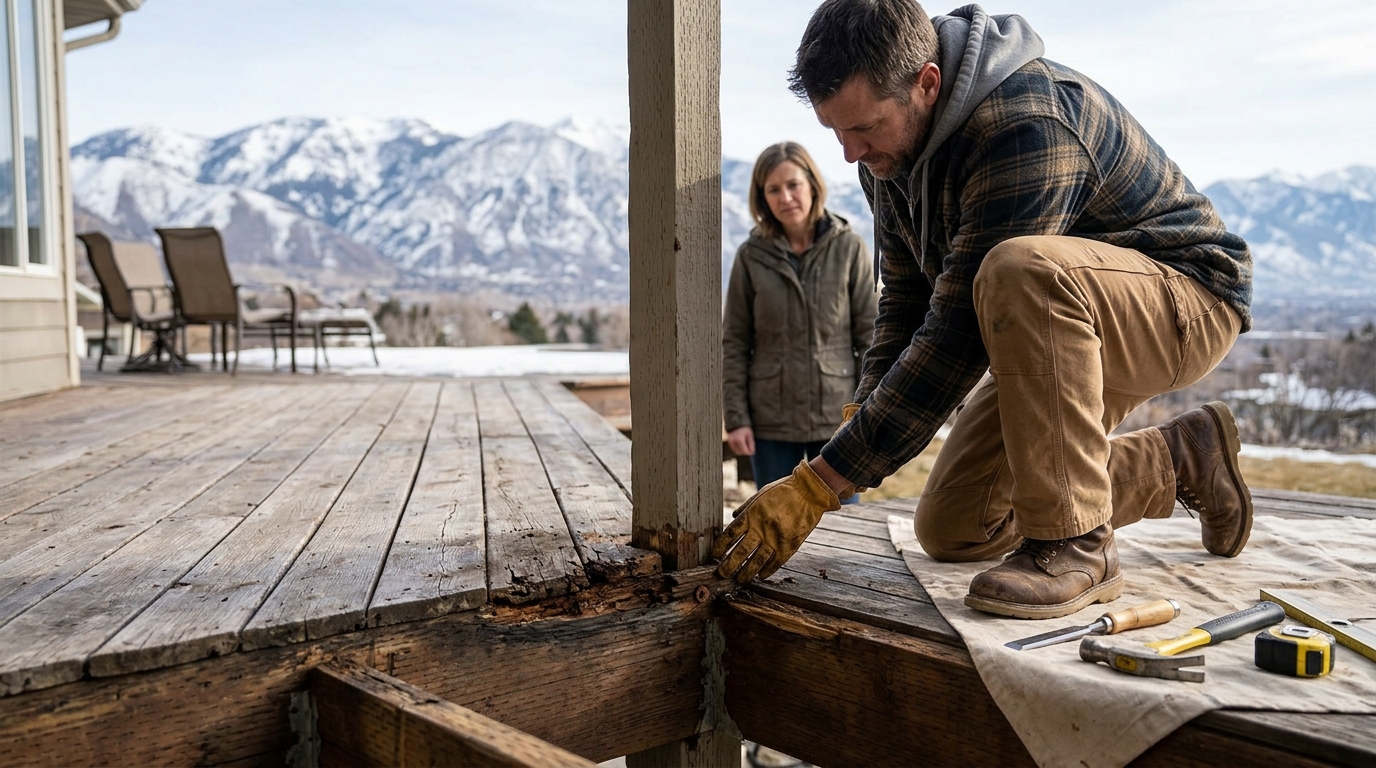
Utah's unique climate creates a brutal cycle for outdoor timber structures. Rapid freeze-thaw cycles during winter months force moisture into wood fibers, while intense summer UV radiation dries and cracks that same wood, allowing water to penetrate deeper. According to the National Association of Realtors, outdoor living spaces can increase home value by up to 10 to 15 percent, making the preservation of your deck a critical financial investment. When rot sets in, it is not merely a cosmetic issue but a structural failure that compromises safety. This guide details how to diagnose, repair, and prevent deck rot in the Wasatch Front region. (About Us 8211 Utah)
Step 1: Diagnose the Extent of the Rot
Before purchasing materials, you must accurately assess the damage. Utah's extreme temperature swings cause wood to expand and contract rapidly, leading to checks and splits. Soft rot typically begins in areas where water pools, such as around post bases or where decking boards meet the ledger board.
Use a screwdriver or an awl to probe the wood. If the tool sinks in easily, the wood is compromised. Soft rot is a fungal decay that weakens the structural integrity of the timber. It is distinct from dry rot, which is more destructive and spreads rapidly through hidden joists. Check the ledger board where the deck attaches to your home. This is the most critical connection point. If the ledger board is rotting, the entire deck could detach during a heavy snow load event.
Inspect the area around deck posts. Concrete footings in Utah soil can wick moisture up into wooden posts if they are not properly sealed. This capillary action is a primary cause of post rot in Davis and Salt Lake counties. If the wood at the base of the post is spongy, you need to address the moisture source immediately.
Step 2: Remove Damaged Wood Safely
Once you have mapped the rot, you must remove all compromised material. Leaving even a small amount of rotting wood will allow the fungus to spread to healthy timber. Safety is paramount when working with structural components.
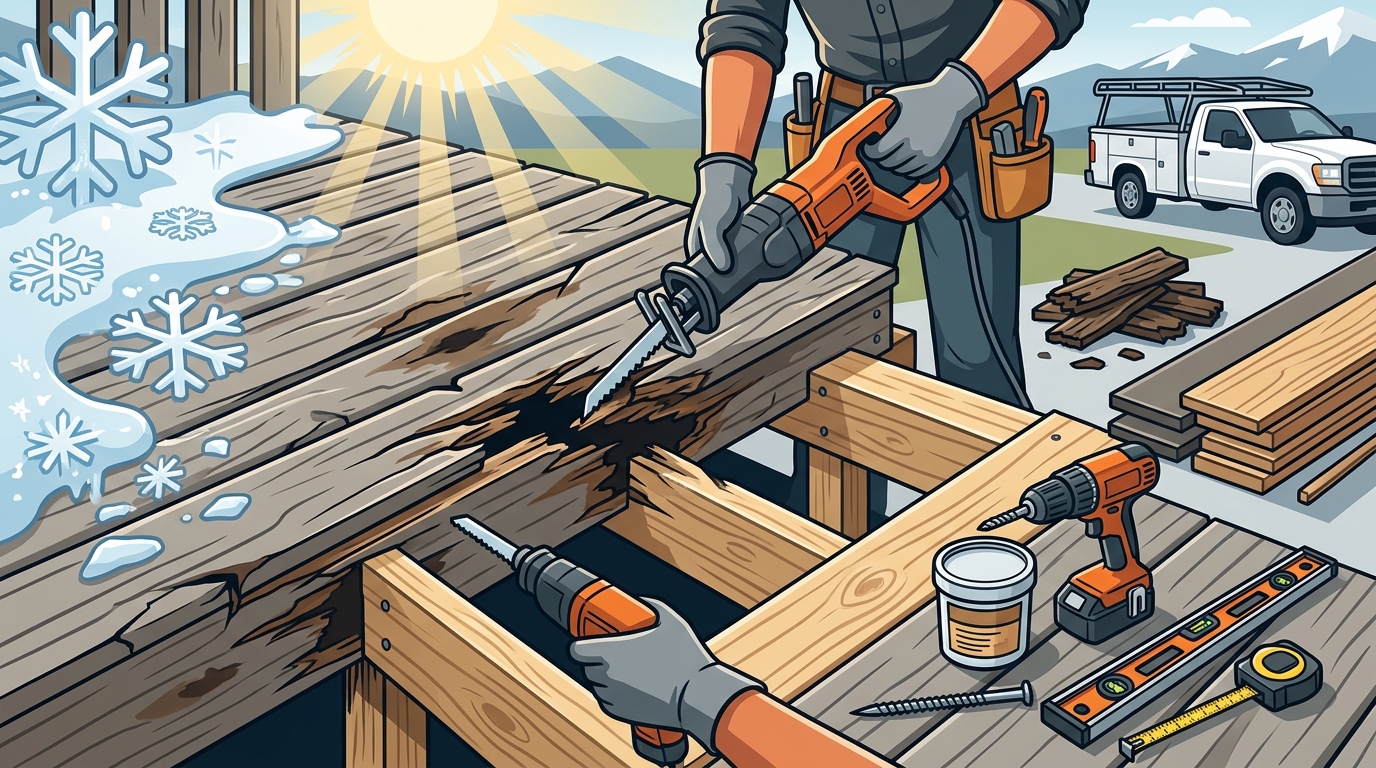
Always wear eye protection and a respirator when cutting or sanding rotting wood. Spores from decay fungi can be harmful if inhaled. Use a reciprocating saw or a circular saw to cut out the damaged sections. For joists, you may need to install a sister joist alongside the damaged one rather than replacing the entire beam. This provides structural support while you work.
When removing decking boards, work from the edge of the deck inward. Remove the fasteners carefully to avoid damaging adjacent healthy boards. If the rot is localized to a single board, you can cut it out in sections and replace it. If the rot has spread to multiple joists, you may need to replace entire sections of the deck frame.
Step 3: Treat and Reinforce Joists
After removing the rot, treat the remaining healthy wood to prevent recurrence. Utah's high altitude and intense sun require wood preservatives that offer UV resistance in addition to moisture protection.
Apply a copper naphthenate preservative to all cut ends and exposed surfaces. This chemical penetrates deep into the wood fibers and kills remaining fungal spores. For joists that are still structurally sound but show early signs of moisture damage, use a wood hardener. Wood hardener is a liquid resin that penetrates decayed wood and restores its structural strength. It is particularly effective for addressing soft rot in load-bearing members.
If you are installing new lumber, choose pressure-treated wood rated for ground contact. Look for lumber stamped with the AWPA (American Wood Protection Association) U1 or U4 rating. This ensures the wood has been treated with sufficient preservatives to withstand Utah's harsh climate. Cedar and redwood are also excellent choices for decking due to their natural resistance to decay and insects.
Step 4: Replace Decking Boards
With the frame treated and reinforced, it is time to replace the decking. The choice of material will determine the longevity of your repair. Composite decking has become increasingly popular in Utah because it requires no staining or sealing and resists rot, mold, and UV damage.
| Material Type | Pros | Cons | Best For Utah Climate |
|---|---|---|---|
| Pressure-Treated Pine | Low cost, easy to work with | Requires annual sealing, prone to warping | Budget projects |
| Cedar | Natural beauty, resistant to insects | Expensive, requires regular maintenance | Traditional aesthetics |
| Composite | Low maintenance, rot-proof | Higher upfront cost, can get hot | High sun exposure areas |
| Spalted Maple | Unique aesthetic, durable | Requires expert finishing | Specialized designs |
When installing new boards, leave a 1/8 inch gap between each board to allow for expansion during summer heat. Use corrosion-resistant screws, such as stainless steel or coated deck screws, to prevent rust stains. Ensure that the decking slopes slightly away from the house to promote water runoff. Proper drainage is essential in Utah, where snowmelt can saturate the ground around your deck foundation.
Step 5: Prevent Future Rot in Utah
Prevention is more cost-effective than repair. Utah's climate demands a proactive approach to deck maintenance. Regular inspections should be part of your seasonal routine.
Seal your deck every one to two years. Use a high-quality sealant that blocks UV rays and repels water. Apply the sealant when the wood is dry and the temperature is between 50 and 90 degrees Fahrenheit. In Utah, this is typically in the spring or early fall. Avoid sealing during the hot summer months, as the wood may be too dry and absorb the sealant unevenly.
Keep the area around your deck clean. Remove leaves, dirt, and debris that can trap moisture against the wood. Ensure that gutters and downspouts direct water away from your deck. If your deck is attached to your home, check the flashing around the ledger board annually. Flashing is a metal strip that directs water away from the joint between the deck and the house. If the flashing is damaged or missing, water can seep into your home's structure, causing costly damage.
Consider installing a deck cover or pergola. These structures provide shade, reducing UV damage, and protect the deck from snow and rain. Utah Decks specializes in designing custom outdoor spaces that withstand the local climate. Visit our project gallery to see examples of durable, high-quality deck designs.
Key Takeaways
- Utah's freeze-thaw cycles and intense UV radiation are the primary causes of deck rot.
- Always probe wood with a screwdriver to detect soft rot before it becomes visible.
- Use copper naphthenate preservatives and wood hardeners to treat damaged joists.
- Composite decking offers superior resistance to rot and requires minimal maintenance.
- Seal your deck annually to protect against moisture and UV damage.
- Check flashing around the ledger board to prevent water intrusion into your home.
- Professional design and installation ensure long-term durability in extreme climates.
Frequently Asked Questions
How long does it take for a deck to rot in Utah?
Without proper maintenance, pressure-treated wood can begin to show signs of rot within 5 to 10 years. Cedar may last longer, but composite decking can last 25 years or more without rotting.
Can I fix rotting deck posts without replacing them?
If the rot is limited to the top portion of the post, you can splice in a new section of wood. However, if the base of the post is rotting, it is safer to replace the entire post to ensure structural integrity.
What is the best wood for decks in Utah?
Composite decking is often the best choice for Utah due to its resistance to UV damage and moisture. If you prefer natural wood, cedar or redwood are excellent options due to their natural decay resistance.
How do I stop water from pooling under my deck?
Ensure that your deck has proper drainage by sloping the ground away from the structure. Install French drains or swales if water tends to collect in the area.
Is it safe to walk on a deck with minor rot?
No. Even minor rot can indicate structural weakness. Walking on a compromised deck can lead to serious injury. Have a professional assess the damage before using the deck.
How often should I seal my deck?
In Utah's climate, you should seal your deck every one to two years. Test the wood by sprinkling water on it. If the water beads up, the sealant is still effective. If it soaks in, it is time to reseal.
What causes the white powder on my deck?
This is likely efflorescence, a salt deposit that forms when water evaporates from concrete or pressure-treated wood. It is not harmful but can indicate moisture issues that need to be addressed.
Get Professional Help
Deck repair and replacement are complex tasks that require specialized knowledge and tools. Attempting to fix significant rot without proper expertise can lead to further damage and safety hazards. Utah Decks offers expert deck design, construction, and repair services tailored to the unique challenges of the Utah climate. Our team is dedicated to building decks that are not only beautiful but also durable and safe.
Contact us today to schedule a consultation. We will assess your deck's condition and provide a comprehensive repair or replacement plan. Visit our contact page to get started. You can also explore our services to learn more about how we can enhance your outdoor living space.