
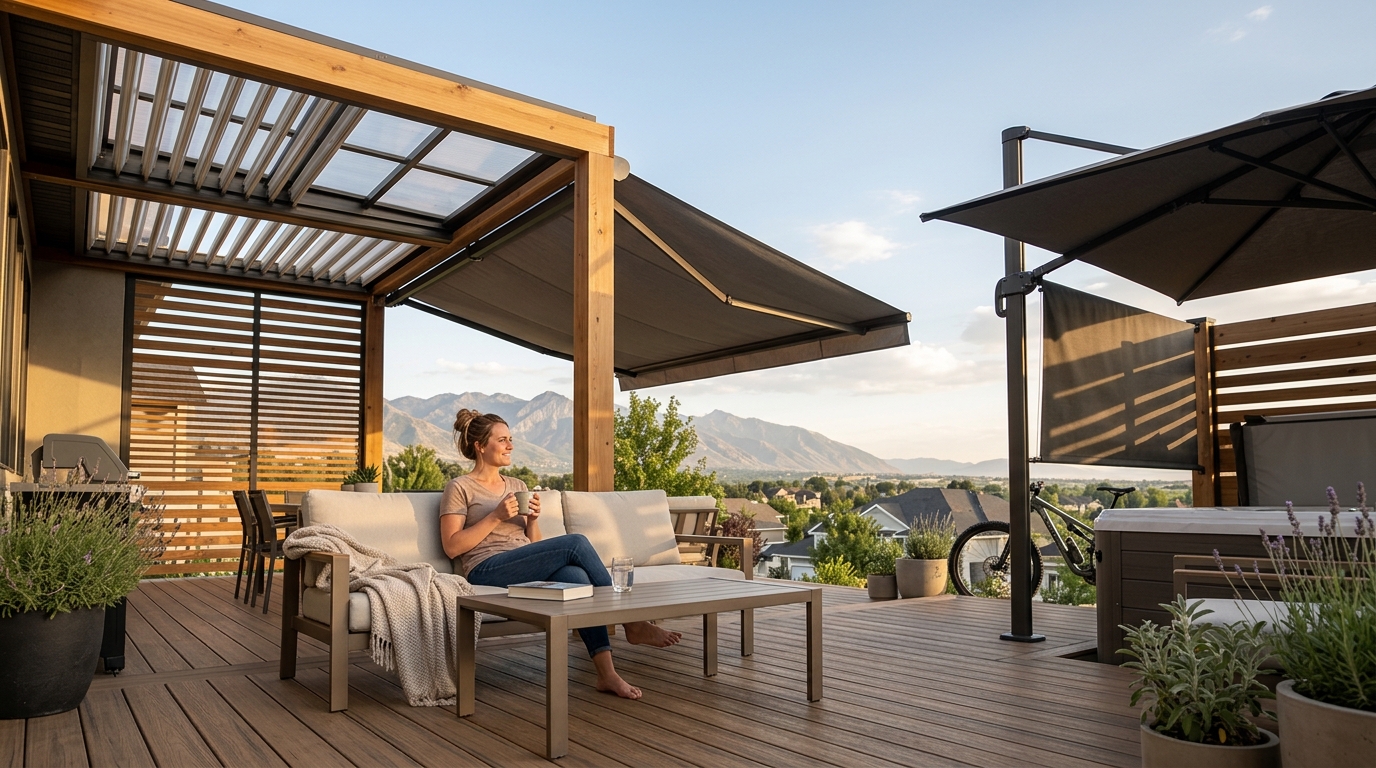
Outdoor living in Utah demands a strategic approach to weather protection. The state experiences intense UV radiation during long, dry summers and sudden, heavy snow loads in the winter months. Choosing the wrong shade structure can lead to rapid material degradation or structural failure. According to industry data on outdoor construction durability, proper material selection reduces long-term maintenance costs by up to 40% compared to unprotected wood structures. This guide breaks down the functional differences between pergolas, awnings, and cantilever covers to help you make an informed investment. (Utah Decks)
Understanding Structural Design and Support
The primary difference between these three cover types lies in their structural integrity and footprint. A pergola is a permanent architectural structure typically built with four or more posts anchored directly into the ground or deck frame. It offers a rigid, open-lattice roof that provides partial shade and defines the outdoor space visually. Pergolas are ideal for homeowners who want a lasting addition to their property that increases curb appeal.
In contrast, an awning is a fabric or metal canopy attached to the side of a home or a freestanding frame. Awnings are designed to retract or remain fixed, offering immediate shade but limited structural permanence. They are excellent for seasonal use but may not withstand the heavy snow loads common in Utah's higher elevations without professional reinforcement.
A cantilever cover is a specialized shade structure that extends outward from a single support point or wall. This design maximizes usable deck space by eliminating central posts that obstruct movement. Cantilevers are particularly useful for covering large areas without compromising the flow of the deck, making them a popular choice for modern Utah homes with expansive outdoor entertaining areas.
Weather Resilience in Utah Climates
Utah's unique geography creates distinct challenges for outdoor structures. The state's high elevation exposes decks to intense UV radiation, which can fade fabrics and warp wood. Additionally, winter storms bring significant snow accumulation that can crush lightweight structures.
Pergolas built with high-grade composite materials or pressure-treated wood offer superior resilience against these elements. When constructed with proper engineering, they can support heavy snow loads without collapsing. According to building code standards in Salt Lake County, permanent structures must meet specific load-bearing requirements to ensure safety during winter months.
Awnings, particularly retractable fabric models, are more vulnerable to wind damage and snow accumulation. While they provide excellent shade during the summer, they often require removal or retraction before severe weather events. This adds a layer of maintenance that some homeowners may find inconvenient.
Cantilever covers are engineered to distribute weight differently than traditional structures. High-quality cantilevers use reinforced aluminum or steel frames to handle wind uplift and snow pressure. However, the single-point support system requires precise installation to ensure stability. Improper installation can lead to wobbling or structural failure during high winds.
Material Options and Maintenance
The longevity of your deck cover depends heavily on the materials used. Utah Decks specializes in premium materials that withstand the local climate.
Pergola Materials
Modern pergolas often use capped composite lumber, such as TimberTech or Trex. These materials are resistant to rot, insects, and fading. They require minimal maintenance, typically just an occasional wash with soap and water. Traditional wood pergolas offer a natural aesthetic but require regular staining and sealing to prevent weathering.
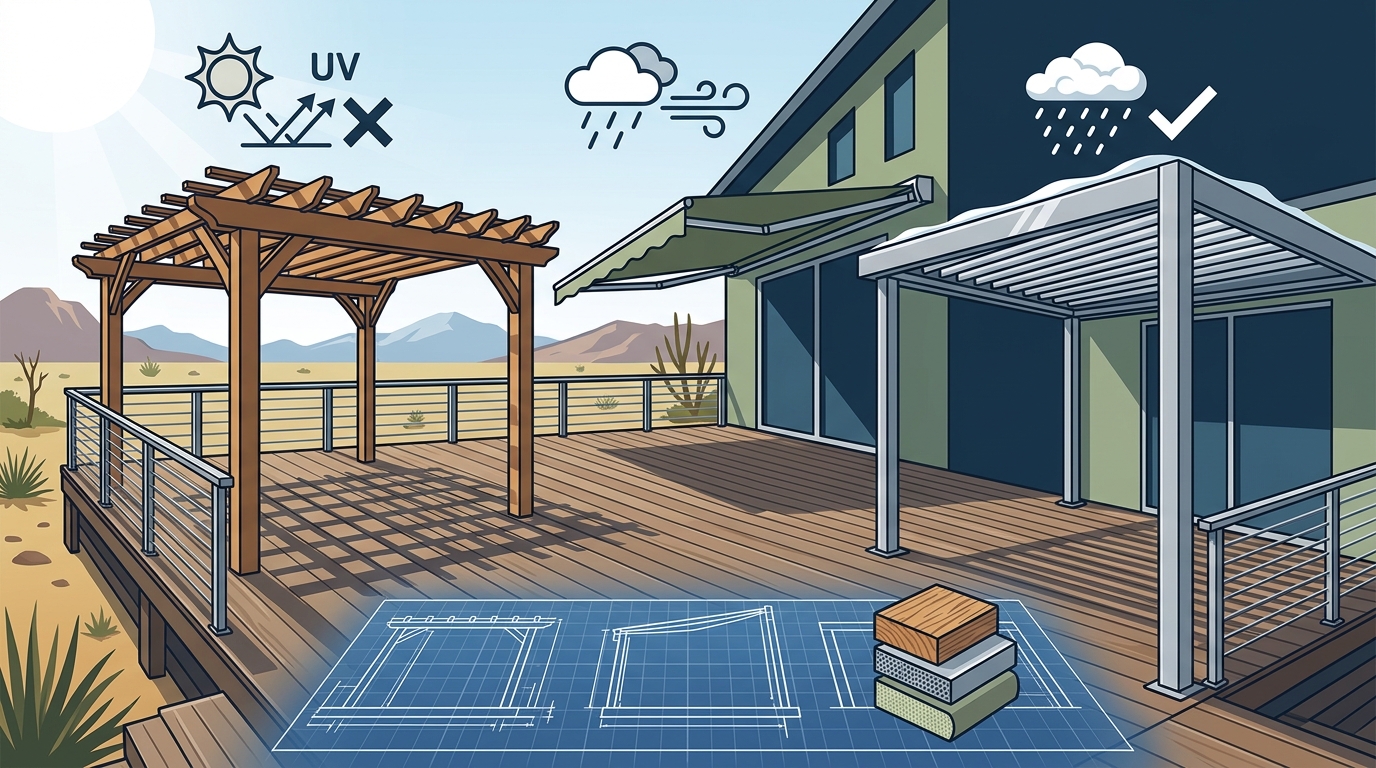
Awnings and Fabric Choices
Awnings utilize high-density acrylic or polyester fabrics. These materials are designed to be UV-resistant and water-repellent. However, fabric awnings have a finite lifespan, usually ranging from 10 to 15 years, depending on exposure. Metal awnings, often made from aluminum, offer greater durability but can be noisy during rain events.
Cantilever Frame Construction
Cantilever structures are typically built from powder-coated aluminum or steel. Powder coating provides a protective layer against corrosion, which is essential in areas with road salt or high humidity. The fabric or polycarbonate roof panels used on cantilevers must also be UV-stabilized to prevent yellowing and brittleness over time.
Installation Complexity and Timeline
Installation time and complexity vary significantly among these options. A custom-built pergola is a construction project that involves digging footings, setting posts, and framing the roof. This process can take several days to complete, depending on the size and complexity of the design.
Awnings are generally quicker to install, especially if they are attached to an existing wall. However, freestanding awnings require their own foundation, which adds to the installation time. The precision required for mounting ensures that the structure remains secure and functional.
Cantilever installation is the most technically demanding. It requires precise leveling and anchoring to ensure the extended arm remains stable. The engineering involved in cantilever systems means that professional installation is not just recommended but essential for safety. Utah Decks employs skilled in-house teams to ensure every installation meets the highest standards of quality and integrity.
Cost Analysis and Value
Investment levels differ based on materials, size, and complexity. Pergolas generally represent the highest initial investment due to their permanent nature and material costs. However, they offer the highest return on investment by increasing property value and providing a lasting outdoor room.
Awnings are often the most affordable option upfront, making them attractive for budget-conscious homeowners. However, the need for replacement fabrics and potential repairs can increase the long-term cost.
Cantilever covers fall in the mid-to-high price range. They offer a balance between cost and functionality, providing extensive coverage without the need for multiple support posts. The value proposition lies in the maximized usable space and the modern aesthetic they bring to a deck.
| Feature | Pergola | Aawning | Cantilever Cover |
|---|---|---|---|
| Structure Type | Permanent, post-supported | Attached or freestanding canopy | Extended arm from single point |
| Shade Coverage | Partial (lattice) | Full (when extended) | Full (adjustable) |
| Maintenance Level | Low (composite) to High (wood) | Medium (fabric care) | Low (frame cleaning) |
| Utah Weather Suitability | Excellent | Moderate (seasonal) | Good (if engineered correctly) |
| Estimated Cost Range | $$$ | $-$$ | $$-$$$ |
Key Takeaways
- Permanence: Pergolas are permanent structures that add significant value to your home, while awnings are often temporary or seasonal solutions.
- Space Efficiency: Cantilever covers maximize deck space by eliminating central posts, making them ideal for large, open entertaining areas.
- Utah Climate: All three structures must be engineered to handle Utah's UV exposure and snow loads to ensure longevity and safety.
- Maintenance: Composite pergolas require the least maintenance, whereas fabric awnings require regular cleaning and eventual replacement.
- Customization: Utah Decks offers custom designs for all three types, ensuring the structure fits your specific aesthetic and functional needs.
- Professional Installation: Proper installation is critical for all three types, especially for cantilevers, to prevent structural failure.
- ROI: Permanent structures like pergolas typically offer a higher return on investment compared to temporary shade solutions.
Frequently Asked Questions
Which deck cover is best for Utah's snow?
Permanent structures like pergolas built with reinforced framing are best for Utah's snow. They are designed to support heavy loads without collapsing. Awnings should be retracted or removed before snowfall to prevent damage.
Can I install a cantilever cover on an existing deck?
Yes, but it requires careful engineering. The deck must be structurally sound to support the leverage created by the cantilever arm. Professional assessment is recommended to ensure safety.
How long do fabric awnings last in Utah?
High-quality acrylic fabrics can last 10 to 15 years in Utah. However, intense UV exposure can shorten this lifespan. Regular cleaning and proper tensioning help extend their durability.
Do pergolas provide full shade?
Standard pergolas provide partial shade through their lattice roof. However, you can add retractable canopies or louvers to a pergola to achieve full shade control when needed.
What is the difference between a pergola and a pavilion?
A pergola has an open lattice roof, while a pavilion has a solid, fully enclosed roof. Both are permanent structures, but pavilions offer complete protection from rain and sun.
Are cantilever covers noisy in the rain?
It depends on the roof material. Polycarbonate or fabric roofs are quieter than metal roofs. Many homeowners prefer fabric or composite materials to minimize rain noise.
How do I choose between a pergola and a cantilever?
Choose a pergola if you want a permanent architectural feature that defines the space. Choose a cantilever if you need maximum open space and flexible shade coverage without central posts.
Start Your Custom Design
Ready to transform your outdoor living space? Utah Decks offers expert design and installation services for pergolas, awnings, and cantilever covers. Our team is dedicated to high quality, high standards, and high integrity in every project. Schedule your free deck design consultation today to discuss your vision. You can also explore our services page to learn more about our offerings. For more information about our company, visit our about us page. Contact us directly at hello@utahdecks.co or call (385) 396-7380.