
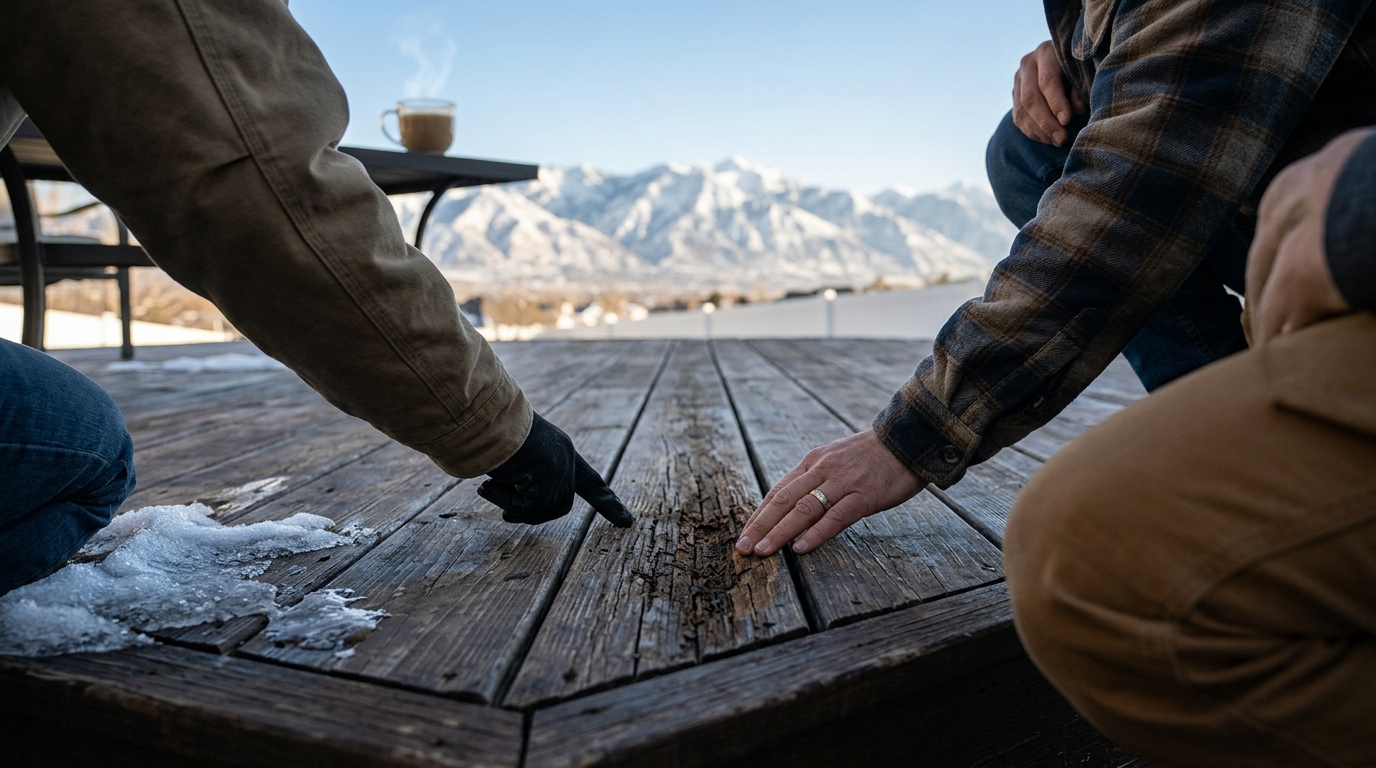
Utah’s unique climate creates a brutal cycle for outdoor wood structures. Rapid snowmelt followed by intense UV exposure accelerates wood decay faster than in most other regions. According to industry data on material degradation in high-altitude environments, composite and wood decks in the Wasatch Front face significantly higher stress levels than national averages. This guide explains how to diagnose, repair, and prevent rot in your Utah deck.
Diagnosing the Source of Deck Rot
Before you can fix a rotting deck, you must identify the extent of the damage. Utah’s freeze-thaw cycles are particularly destructive. When water penetrates wood fibers and freezes, it expands, causing micro-fractures that allow more moisture in. This cycle repeats throughout the winter, leading to structural failure.
Deck rot is a fungal decay process. Wood decay fungi require moisture, oxygen, and suitable temperatures to grow. In Utah, the combination of heavy snowpack and rapid spring thaw provides the perfect moisture environment. If your deck boards feel soft, spongy, or crumble when probed with a screwdriver, the wood is compromised.
Check the ledger board first. This is the horizontal board attached to your home’s framing. If the ledger board rots, the entire deck can detach. This is a critical safety issue. Look for rusted nails, peeling paint, or soft wood where the deck meets the house. According to structural engineering standards, improper ledger board attachment is the leading cause of deck collapse.
Inspect the joists and beams. These are often hidden under the decking. Use a moisture meter to check for hidden dampness. If the moisture content exceeds 20%, the wood is at high risk for rot. Utah’s dry air can mask this risk, making regular inspections vital.
The Impact of Utah Snow on Deck Structure
Salt Lake City and surrounding areas receive significant snowfall. This snow does not just sit on the deck; it melts and refreezes. The resulting ice dams can trap water against the deck surface. This trapped water has nowhere to go, leading to prolonged saturation.
Deck rot in Utah is often exacerbated by poor drainage. If your deck is built too close to the house or has insufficient slope, water pools. This pooling accelerates decay. You must ensure that your deck has proper grading and drainage away from the structure.
Consider the weight of the snow. Heavy snow loads can stress joists and connections. If the wood is already weakened by rot, the additional load can cause sudden failure. Regular snow removal is essential. Use a roof rake or a soft snow pusher to remove snow from the deck surface. Avoid metal shovels that can damage the wood surface.
Utah’s high elevation also means colder temperatures. This slows the drying process after snowmelt. Wood that stays wet for extended periods is more susceptible to fungal growth. Proper ventilation under the deck is crucial. Ensure that your deck has adequate airflow to dry out quickly after snow events.
UV Damage and Sun Exposure Effects
Utah is known for its sunny days. While this is pleasant for homeowners, it is harsh on deck materials. UV radiation breaks down the lignin in wood, causing it to gray, crack, and splinter. This damage creates entry points for moisture and fungi.
Composite decking is often marketed as low maintenance, but it is not immune to UV damage. High-quality composite boards have UV inhibitors, but cheaper options can fade, warp, or become brittle. According to material science studies, prolonged UV exposure reduces the structural integrity of some composite materials over time.
Wood decks require regular sealing to protect against UV rays. If your wood deck is gray and dry, it is losing its protective oils. This dryness makes it more prone to cracking. When cracks form, water can enter, leading to rot. Regular staining or sealing is non-negotiable in Utah’s climate.
Shade structures can help mitigate UV damage. Pergolas, awnings, and umbrellas provide relief for your deck. This reduces the thermal cycling that causes wood to expand and contract. Less movement means less cracking and less opportunity for water infiltration.
Step-by-Step Deck Repair Process
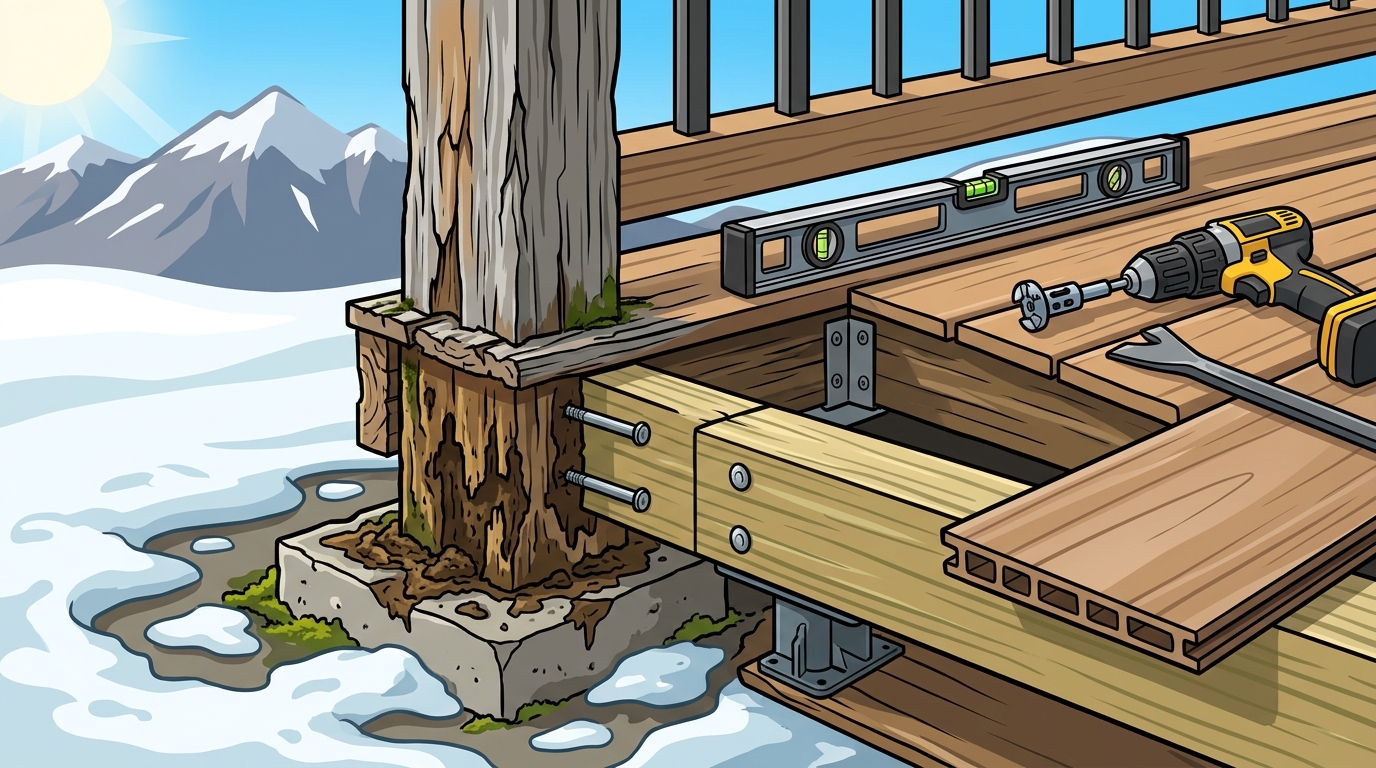
Fixing a rotting deck involves several steps. You must remove the damaged wood, treat the area, and replace the boards. This process requires careful planning and execution.
Step 1: Assess the Damage
Start by mapping out the rot. Mark the affected areas with chalk. Determine if the rot is surface-level or structural. Surface rot can be scraped and treated. Structural rot requires board replacement.
Step 2: Remove Damaged Wood
Use a reciprocating saw or a circular saw to cut out the rotted sections. Cut back to solid, healthy wood. Be careful not to damage the surrounding structure. If the joists are rotting, you may need to sister new joists alongside the old ones.
Step 3: Treat the Area
Apply a wood hardener to any remaining soft wood. This penetrates the wood and restores its strength. Then, apply a preservative treatment to prevent future fungal growth. This step is critical in Utah’s moist environment.
Step 4: Replace the Boards
Install new deck boards. Ensure they are properly spaced for drainage. Use corrosion-resistant fasteners, such as stainless steel or coated screws. These resist the moisture and salt that can accelerate corrosion.
Step 5: Seal and Protect
Apply a high-quality sealant or stain to the new wood. This provides an additional layer of protection against UV rays and moisture. Follow the manufacturer’s instructions for application and drying times.
Best Materials for Utah Climate
Choosing the right material is key to preventing future rot. Utah’s climate demands materials that can withstand both moisture and UV exposure.
| Material | Pros for Utah | Cons for Utah | Best For |
|---|---|---|---|
| Capped Composite | High UV resistance, low maintenance, rot-proof | Higher upfront cost, can get hot in sun | Low-maintenance homeowners |
| PVC Decking | 100% synthetic, no rot, excellent fade resistance | Expensive, limited texture options | High-elevation homes |
| Pressure-Treated Wood | Affordable, easy to install | Requires regular sealing, prone to rot if neglected | Budget-conscious projects |
| Tropical Hardwood | Naturally rot-resistant, durable | Heavy, expensive, requires oiling | High-end custom decks |
Capped composite decking is often the best choice for Utah. It combines the look of wood with the durability of plastic. The cap protects against UV rays and moisture. This makes it ideal for the state’s extreme weather. Explore our materials to see which option fits your needs.
Key Takeaways
- Utah’s freeze-thaw cycles are the primary cause of deck rot. Rapid snowmelt followed by freezing temperatures expands wood fibers, causing cracks.
- UV exposure degrades wood and composite materials. Regular sealing or choosing UV-resistant materials is essential.
- Check the ledger board first. It is the most critical structural component and the most common point of failure.
- Capped composite and PVC decking offer the best resistance to Utah’s climate. They do not rot and resist UV damage.
- Proper drainage and ventilation are crucial. Water must flow away from the deck and dry quickly.
- Regular maintenance prevents major repairs. Inspect your deck annually for signs of rot or damage.
- Professional assessment is recommended for structural issues. Utah Decks has over 350 satisfied customers.
Frequently Asked Questions
How do I know if my deck is rotting?
Look for soft spots, discoloration, and crumbling wood. Use a screwdriver to probe the surface. If it sinks in easily, the wood is rotting. Check the underside of the deck for mold or mildew.
Can I fix rotting deck boards myself?
Minor surface rot can be repaired with wood hardener and filler. Structural rot requires board replacement. If you are unsure, consult a professional. Contact us for a free inspection.
What is the best deck material for Utah?
Capped composite decking is highly recommended. It resists UV rays and moisture. PVC decking is also excellent for high-elevation areas. Both materials do not rot.
How often should I seal my wood deck?
Seal your wood deck every one to two years. Utah’s sun can degrade sealants quickly. Inspect the deck annually and reseal as needed.
Does snow damage composite decking?
Snow itself does not damage composite decking. However, the weight of the snow can stress the structure. Ensure your deck is built to handle local snow loads.
How much does it cost to repair a rotting deck?
Costs vary based on the extent of the damage. Minor repairs may cost a few hundred dollars. Major structural repairs can cost thousands. Use our cost estimator for a rough estimate.
Why is my deck rotting so fast?
Utah’s climate accelerates decay. Snowmelt provides moisture, and sun degrades protective layers. Poor drainage or lack of maintenance can speed up the process.
Schedule Your Free Design Consultation
Don’t let rot ruin your outdoor space. Utah Decks specializes in high-quality deck construction and repair. We understand the unique challenges of Utah’s climate. Our team uses premium materials and expert craftsmanship to build decks that last. Schedule your free design appointment today. We will assess your deck and provide a custom solution. Call us at (385) 396-7380 or email hello@utahdecks.co. Let us help you create a safe and beautiful outdoor space.