
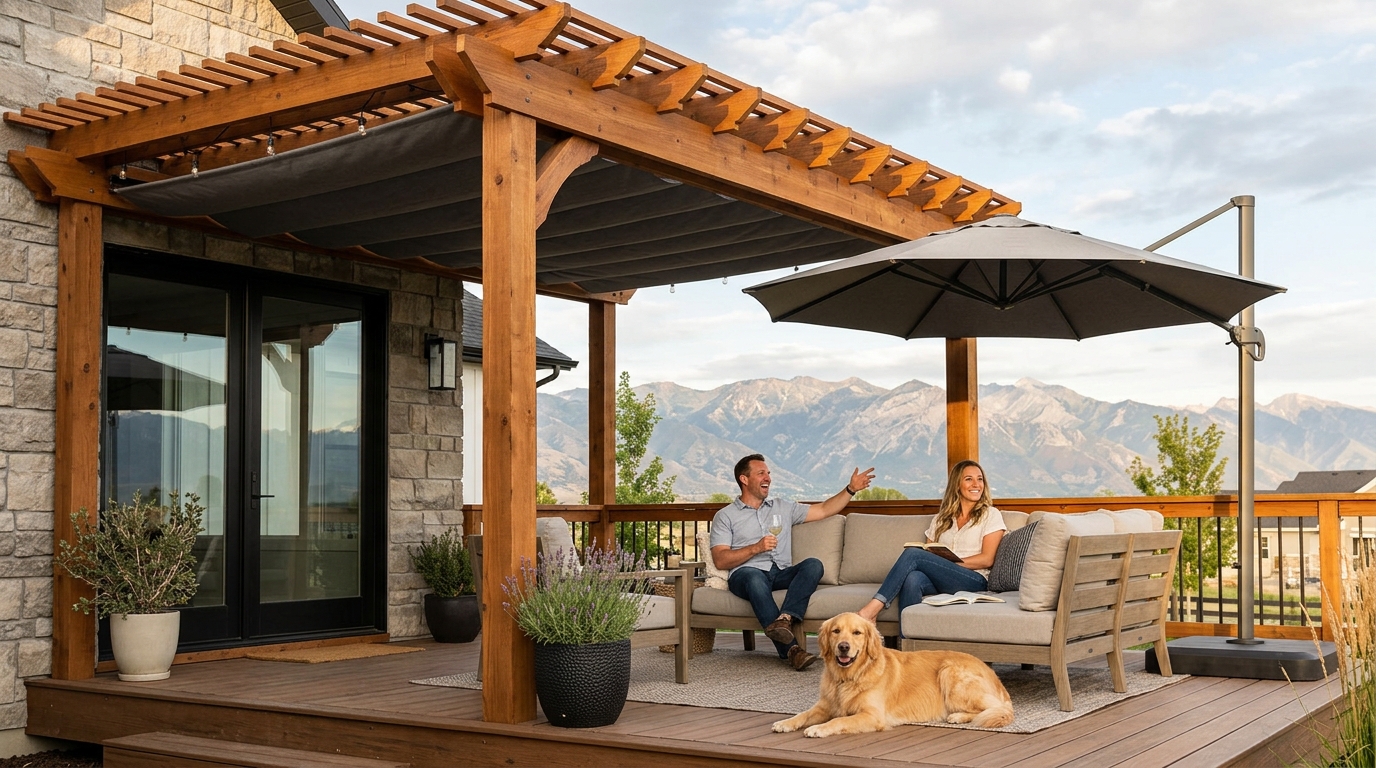
Utah homeowners face a unique set of weather challenges that demand precise architectural solutions. According to the National Weather Service, the Intermountain West experiences over 100 days of intense sun exposure annually, coupled with sudden, heavy monsoon rains in July and August. This combination of ultraviolet radiation and flash flood risks makes selecting the right deck cover not just a matter of comfort, but of structural preservation. Choosing the wrong shelter can lead to rapid wood rot, fading furniture, and wasted investment. This guide breaks down the functional differences between pergolas, awnings, and cantilever covers to help you decide which structure aligns with your lifestyle and climate needs. (Contact Us)
Understanding Structural Design and Support
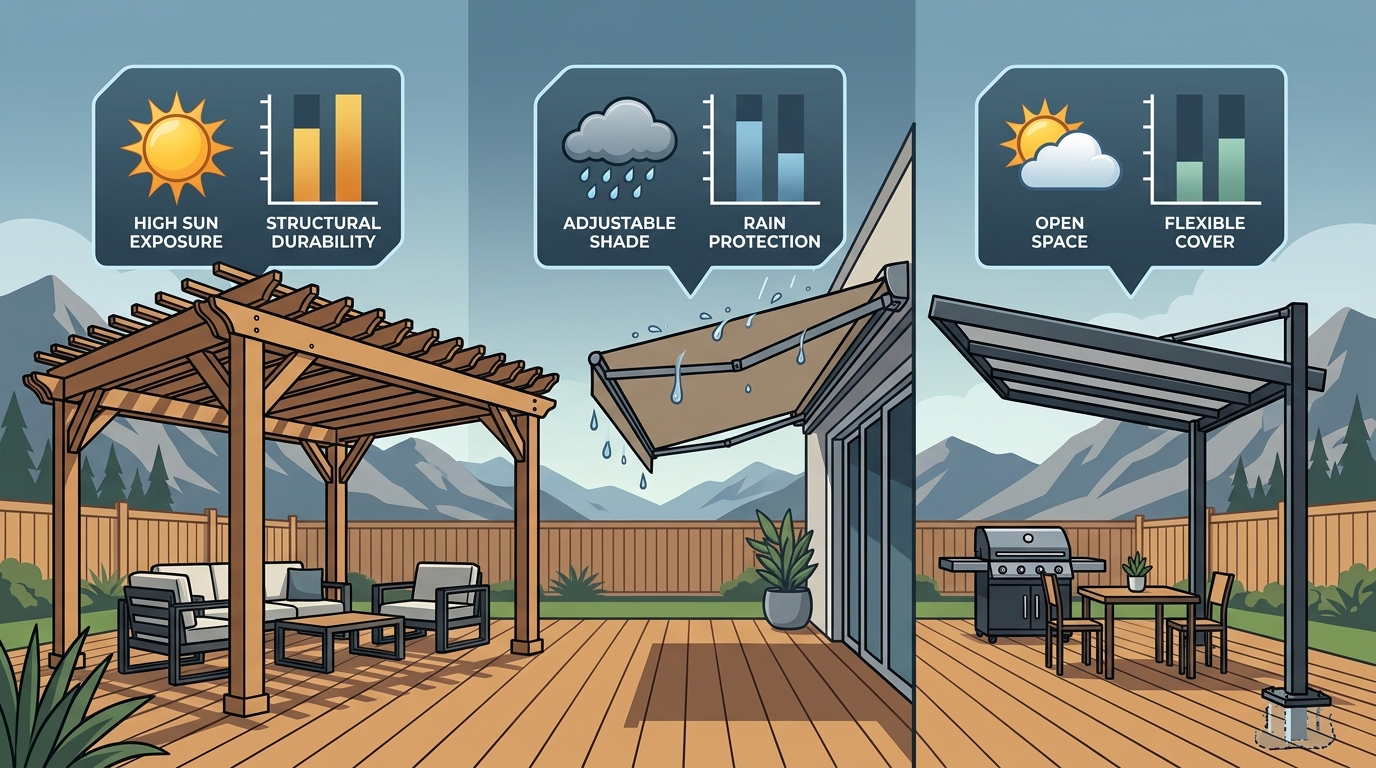
The fundamental difference between these three options lies in their physical footprint and load-bearing mechanisms. A pergola is a permanent outdoor structure consisting of columns supporting a roof grid, typically made of wood, aluminum, or vinyl. It is anchored directly into the ground or deck framing, providing a fixed architectural element that enhances property value. In contrast, an awning is a fabric or metal canopy attached to the side of a house or a freestanding frame. It relies on tension and rigid arms to extend outward, offering temporary or semi-permanent coverage. (About)
A cantilever cover operates on a different mechanical principle. It is a large, rigid shade structure supported by a single post or a pair of posts on one side, allowing the roof to extend significantly over the deck without obstruction in the middle. This design maximizes usable space, making it ideal for large gatherings where unobstructed floor space is critical. For homeowners in Salt Lake City and surrounding areas, understanding these structural differences is the first step toward a successful installation. You can explore our custom pergola services to see how permanent structures integrate with existing landscapes.
Shade Quality and UV Protection Levels
Shade quality varies dramatically across these three options. Pergolas provide dappled shade. While they block direct sunlight, the open lattice or slat design allows some UV rays to penetrate. This is often desirable for creating a natural, airy feel, but it may not be sufficient for protecting sensitive fabrics or preventing skin burns during peak noon hours. Many Utah residents upgrade their pergolas with adjustable louvered roofs to achieve full, controllable shade coverage.
Awnings and cantilever covers offer solid, complete shade. When made from high-density fabric or polycarbonate, they block nearly 100% of UV radiation. This is crucial for preserving outdoor furniture, which can degrade rapidly under Utah's intense sun. According to the University of Utah Health department, prolonged exposure to UV rays is a leading cause of skin damage in the region. Solid covers create a cooler microclimate, often lowering the ambient temperature under the shelter by 10 to 15 degrees Fahrenheit compared to direct sun exposure.
Weather Resilience in Utah Climates
Utah's weather is unpredictable, shifting from dry heat to sudden thunderstorms with little warning. Pergolas are highly resilient to wind and rain. Their open design allows wind to pass through, reducing the risk of structural damage during high gusts. However, rain will pass through the slats unless a retractable canopy is added. This makes pergolas excellent for ventilation but less ideal for keeping the deck dry during a storm.
Awnings are more vulnerable to wind. If not properly tensioned or if made from lightweight fabric, they can flap violently or tear in strong gusts. Many modern awnings come with wind sensors that automatically retract the fabric when speeds exceed a safe threshold. Cantilever covers, being rigid structures, handle wind better than fabric awnings but must be engineered with proper anchoring to withstand heavy snow loads common in the Wasatch Front. According to the American Society of Civil Engineers, proper snow load calculation is vital for any permanent outdoor structure in mountainous regions.
Installation Complexity and Maintenance
Installation complexity is a major differentiator. Pergolas are permanent installations requiring concrete footings, precise leveling, and often professional engineering. They are a long-term commitment to your property layout. Awnings are generally easier to install, especially retractable models that attach to existing siding. However, they require regular cleaning to prevent mold and mildew buildup, which is common in humid summer evenings. Cantilever covers require significant structural support and often need a concrete pad or heavy-duty deck reinforcement to support the single-point or dual-point load.
Maintenance varies by material. Wood pergolas need annual staining or sealing to prevent rot and insect damage. Aluminum pergolas and cantilever covers are virtually maintenance-free, requiring only occasional washing with soap and water. Fabric awnings must be retracted during storms and cleaned regularly to maintain their water-repellent coatings. For detailed guidance on material selection, review our comprehensive deck materials guide.
Cost Analysis and Long-Term Value
Cost is often the deciding factor for homeowners. Pergolas generally have the highest upfront cost due to materials and labor intensity. However, they offer the highest return on investment (ROI) by increasing property value and extending the usable life of your outdoor space. Awnings are the most budget-friendly option, offering immediate shade relief at a lower price point. Cantilever covers fall in the middle, offering premium functionality with moderate cost.
| Feature | Pergola | Aawning | Cantilever Cover |
|---|---|---|---|
| Upfront Cost | High | Low to Medium | Medium to High |
| Shade Coverage | Partial (Adjustable) | Full | Full |
| Wind Resistance | High | Low to Medium | Medium |
| Property Value Impact | Significant Increase | Minimal | Moderate Increase |
| Maintenance Level | Low (Aluminum) | High (Fabric) | Low |
Key Takeaways
- Permanence: Pergolas are permanent structures that enhance property value, while awnings are temporary or semi-permanent shade solutions.
- Shade Quality: Cantilever covers and awnings provide 100% UV blockage, whereas standard pergolas offer dappled shade unless equipped with louvers.
- Weather Suitability: Pergolas handle wind best due to airflow, while rigid cantilever covers are superior for snow load resistance in Utah winters.
- Space Utilization: Cantilever designs maximize floor space by eliminating central support posts, ideal for large decks.
- Cost Efficiency: Awnings are the most affordable entry point, but pergolas offer the best long-term ROI.
- Maintenance: Aluminum structures require minimal upkeep compared to wood pergolas or fabric awnings.
Frequently Asked Questions
Which is better for Utah's sun: a pergola or an awning?
For maximum UV protection, an awning or a louvered pergola is superior. Standard open-beam pergolas allow significant sun penetration, which can be harsh during Utah's peak summer months.
Can a cantilever cover withstand heavy snow?
Yes, if engineered correctly. Cantilever covers must be designed with specific snow load ratings appropriate for your local zip code. Professional installation is critical to ensure structural integrity.
Do I need a permit for a pergola in Utah?
Most permanent structures, including pergolas, require a building permit in Utah municipalities. The requirements vary by city, so checking with your local building department is essential before starting construction.
How long does an awning last?
High-quality fabric awnings typically last 5 to 10 years with proper care. Metal awnings can last 20 years or more with minimal maintenance.
What is the main advantage of a cantilever cover?
The primary advantage is unobstructed space. By supporting the roof from the side, it leaves the center of the deck clear for furniture, dining, or play areas.
Are aluminum pergolas worth the cost?
Yes, aluminum pergolas are highly durable, resistant to rot and insects, and require no staining or sealing, making them a cost-effective long-term investment compared to wood.
Can I add lighting to a pergola?
Absolutely. Pergolas are ideal for lighting integration. You can install recessed LED lights, string lights, or lanterns to extend the usability of your deck into the evening hours.
Contact Utah Decks for Your Project
Choosing the right deck cover is a significant decision that impacts your home's comfort, value, and usability. Whether you prefer the classic elegance of a pergola, the affordability of an awning, or the spaciousness of a cantilever cover, expert guidance is essential. Utah Decks specializes in custom outdoor living solutions tailored to the unique climate of the Intermountain West. Contact us today to schedule a consultation and transform your outdoor space into a year-round retreat. Visit our contact page to get started.