
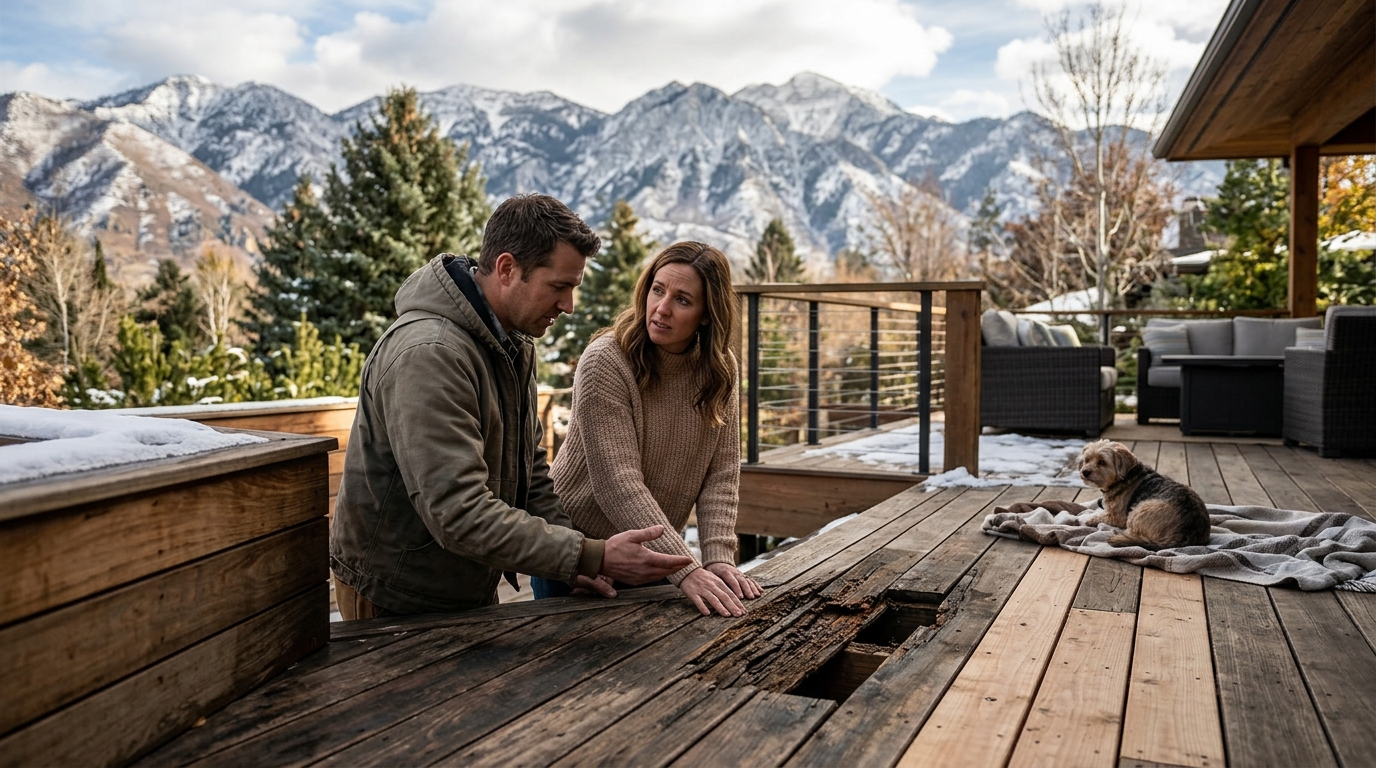
Utah’s unique climate creates a brutal environment for outdoor wood structures. The combination of intense UV radiation in summer and heavy snow loads in winter accelerates wood degradation faster than in most other regions. According to the National Weather Service, Utah experiences some of the highest solar irradiance levels in the United States, which breaks down lignin in wood fibers. Simultaneously, the Utah Climate Center reports that heavy snowfall can exceed 500 inches annually in mountainous areas, leading to prolonged moisture retention. This dual assault causes rot, warping, and structural failure if not addressed immediately. This guide details the precise steps to assess, repair, and prevent deck rot in Utah’s extreme conditions. (Contact Us)
Step 1: Assessing the Extent of the Damage
Before picking up a tool, you must determine how deep the rot has penetrated. Utah’s dry air can sometimes mask surface moisture, making visual inspection tricky. Use a screwdriver or an awl to probe the wood. If the tool sinks in easily, the wood is compromised. Soft, crumbly wood indicates advanced rot that requires replacement. Hard, spongy wood might be salvageable with epoxy consolidation.
Check the joists and beams, not just the decking boards. Water often runs down the side of the deck, rotting the structural supports. If the joist hangers are rusted or the wood touching the metal is soft, you have a structural issue. According to the WoodWorks organization, structural failure in decks is often caused by hidden rot in the ledger board where it attaches to the house. Inspect this area thoroughly.
Step 2: Essential Tools and Materials
Gathering the right materials is critical for a repair that lasts in Utah’s climate. You will need a circular saw, a reciprocating saw for tight spaces, a pry bar, and a drill. For materials, use pressure-treated lumber rated for ground contact (UC4A) for any structural replacements. For decking, consider composite or capped polymer boards which resist Utah’s UV rays better than natural wood.
You will also need a wood consolidant or epoxy filler for minor repairs. Look for products specifically designed for exterior use. Woodpeckers Tools notes that using high-quality fasteners is non-negotiable. Use hot-dipped galvanized or stainless steel screws to prevent rust stains and failure in the humid microclimate created under snow piles.
Step 3: Removing Rotted Wood
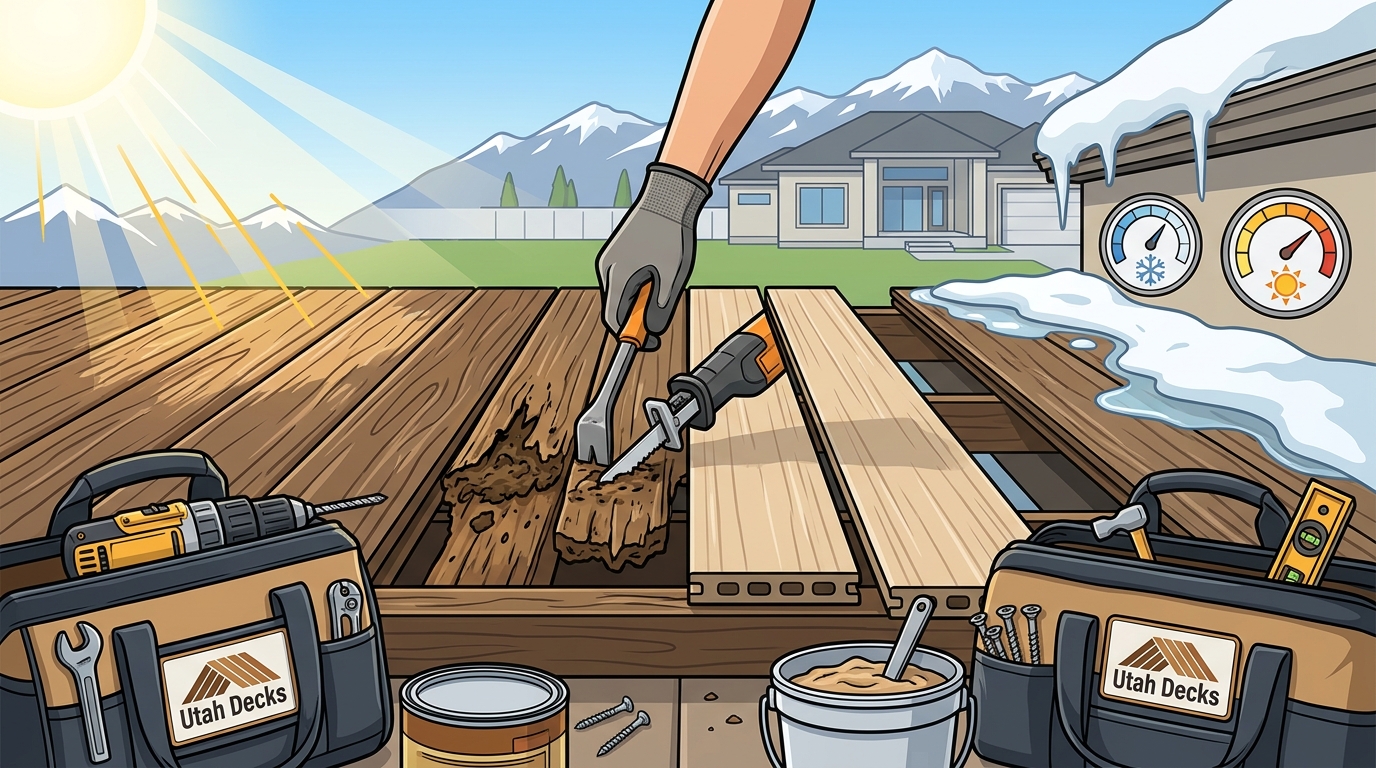
Start by removing the decking boards above the damaged area. Use a pry bar to lift the boards without damaging the surrounding structure. If the boards are screwed in, remove the screws. If they are nailed, use a nail punch to drive them out from the bottom if possible.
Once the boards are removed, cut out the rotted sections of the joists or beams. Cut straight across the grain to create clean edges for the new wood. Never leave any soft wood behind. Even a small amount of rot can spread. If the rot is extensive, you may need to sister a new joist alongside the old one. Sistering involves bolting a new piece of lumber to the side of the existing joist to share the load.
Step 4: Replacing and Sealing
Cut your new pressure-treated lumber to fit the gaps. Treat the cut ends of the lumber with a wood preservative before installation. This is a critical step often missed by DIYers. The cut ends are the most vulnerable to moisture absorption. According to the American Wood Council, proper end-grain sealing can double the lifespan of pressure-treated wood in wet environments.
Secure the new wood with corrosion-resistant fasteners. Ensure there is a slight gap between boards for drainage. In Utah, where snow melts rapidly, proper drainage is essential to prevent water from pooling on the deck surface. Apply a high-quality sealant to the new wood and the surrounding structure. Use a sealant that blocks UV rays to protect against the intense sun exposure.
Step 5: Preventing Future Rot in Utah
Prevention is cheaper than repair. Utah’s climate demands a proactive approach to deck maintenance. First, ensure proper drainage. Water should never sit on the deck surface. Use deck drains or slope the deck slightly away from the house. Second, clean the deck regularly. Remove snow and ice promptly to prevent prolonged moisture exposure. Use a roof rake to clear snow from the roof edge to prevent ice dams from forming on the deck.
Third, re-seal the deck every one to two years. Utah’s UV index is high, so use a sealant with UV inhibitors. According to the Environmental Protection Agency, regular maintenance of exterior wood products reduces the need for chemical treatments and extends the material's life. Finally, consider upgrading to composite materials. Composite decking does not rot, warp, or splinter, making it an ideal choice for Utah’s extreme weather.
Key Takeaways
- Utah’s high UV index and heavy snowfall create a unique rotting environment for wood decks.
- Always inspect the ledger board and joists, not just the surface boards.
- Use pressure-treated lumber rated for ground contact for structural repairs.
- Treat cut ends of new lumber with preservative to prevent immediate moisture absorption.
- Sistering joists is a viable option for extensive structural rot.
- Regular sealing and snow removal are critical for long-term deck health.
- Composite decking offers superior resistance to Utah’s climate extremes.
Frequently Asked Questions
How do I know if my deck joists are rotting?
Probe the joists with a screwdriver. If the wood is soft, crumbly, or dark, it is rotting. Also, look for rust on the joist hangers, which indicates prolonged moisture exposure.
Can I fix rotting deck boards without replacing them?
Minor surface rot can be consolidated with epoxy filler. However, structural rot in joists or beams requires replacement or sistering to ensure safety.
What is the best wood for Utah’s climate?
Pressure-treated pine rated for ground contact is the most common and cost-effective option. For higher durability, consider composite or capped polymer decking.
How often should I seal my deck in Utah?
Due to the intense sun, you should seal your deck every one to two years. Use a sealant with UV inhibitors to prevent fading and cracking.
Does snow damage wood decks?
Yes, prolonged snow cover traps moisture against the wood, leading to rot. Remove snow promptly and ensure proper drainage to mitigate this risk.
What is sistering a joist?
Sistering involves bolting a new piece of lumber alongside an existing joist to reinforce it and share the structural load.
Is composite decking worth the cost?
While more expensive upfront, composite decking requires minimal maintenance and does not rot, making it cost-effective over time in Utah’s harsh climate.
How do I prevent ice dams on my deck?
Ensure proper insulation in your attic to prevent heat loss. Use a roof rake to remove snow from the roof edge and install heat tape if necessary.
Contact Utah Decks for Expert Repair
Deck rot is a progressive issue that worsens with time. If you suspect structural damage, do not attempt a DIY repair. Contact Utah Decks for a professional assessment. Our team specializes in restoring decks to their former glory, using materials and techniques designed for Utah’s unique climate. Visit our services page to learn more about our repair and restoration options. Contact us today to schedule your inspection and protect your home.