
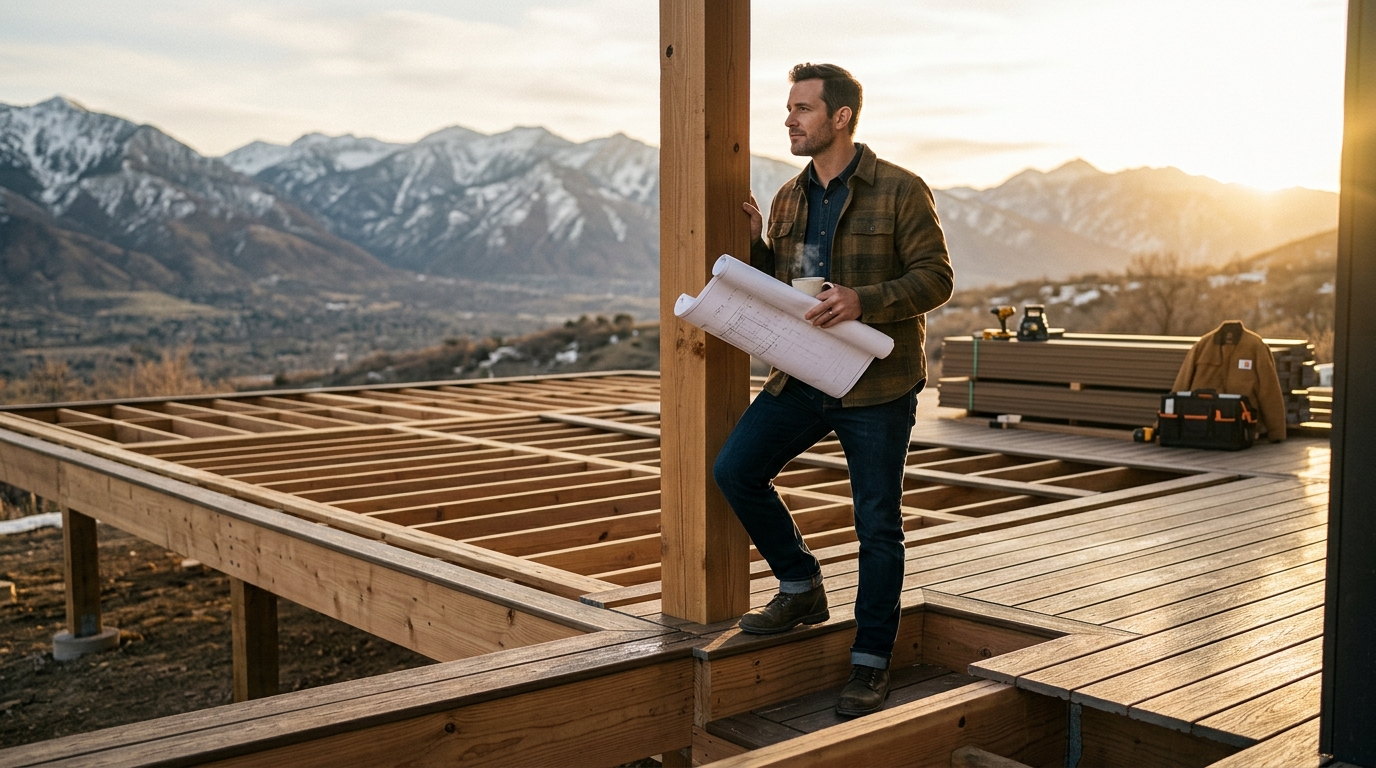
Building a deck in Utah is not merely a home improvement project; it is an engineering challenge against extreme environmental forces. According to the National Weather Service, Utah experiences some of the most volatile temperature swings in the United States, with regional variations that directly impact material integrity and structural longevity. Homeowners who ignore these climatic realities often face costly repairs within five years. This guide outlines the essential criteria for selecting a contractor who understands the unique demands of Utah's terrain and weather patterns. (Contact Us)
Understanding Utah's Climate Impact
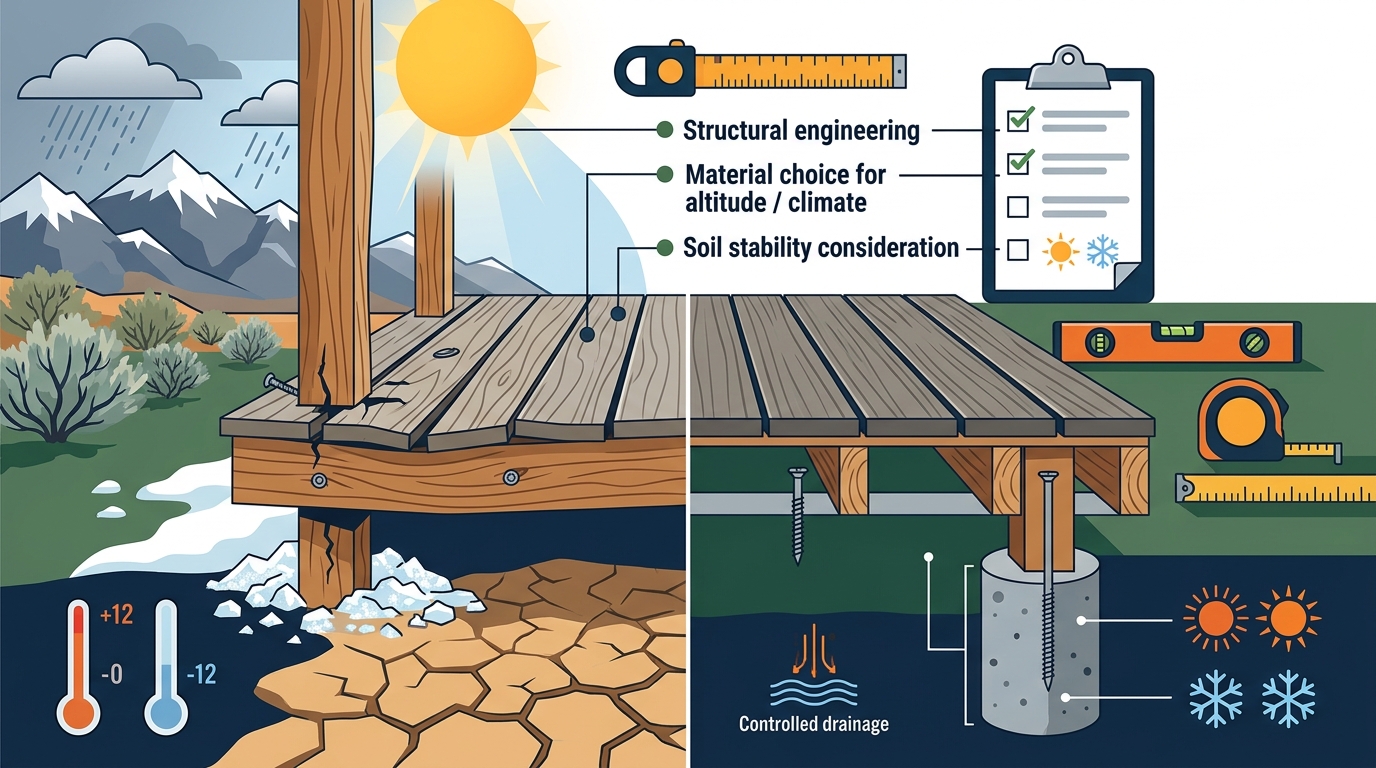
Utah's geography presents a unique set of challenges for outdoor structures. The state is characterized by high desert conditions, intense UV radiation, and significant seasonal temperature fluctuations. These factors accelerate the degradation of organic materials and can cause standard construction methods to fail prematurely.
When evaluating potential contractors, ask specifically how they account for these environmental stressors. A qualified professional will discuss expansion gaps, moisture barriers, and material compatibility with local humidity levels. Ignoring these details leads to warping, cracking, and structural instability.
According to data from the American Wood Council, untreated wood exposed to Utah's freeze-thaw cycles can lose up to 30% of its structural integrity within a decade if not properly sealed and maintained. This statistic highlights the necessity of choosing a contractor who prioritizes climate-resilient construction techniques over low-cost shortcuts.
Verifying Licensing and Insurance
Legal compliance is the first line of defense for homeowners. In Utah, general contractors must be registered with the Utah Division of Occupational and Professional Licensing (DOPL). This registration ensures that the contractor has met the state's financial responsibility and competency requirements.
Beyond licensing, insurance is non-negotiable. You must verify that the contractor carries both general liability insurance and workers' compensation coverage. General liability protects your property from accidental damage during construction. Workers' compensation protects you from being held liable if a worker is injured on your property.
According to the U.S. Bureau of Labor Statistics, construction remains one of the most hazardous industries, with a significant percentage of injuries occurring on residential sites. Therefore, ensuring your contractor has robust coverage is a critical risk management step. Never accept a verbal assurance of insurance; request current certificates of insurance directly from their provider.
Material Selection for Durability
The choice of building materials dictates the lifespan and maintenance burden of your deck. In Utah, the intense sun can fade and brittle standard composite materials quickly. Conversely, the cold winters can cause certain woods to split.
Composite decking is a engineered wood product mixed with plastic. It offers high resistance to rot and insects but requires specific ventilation to prevent heat buildup in Utah's summer months.
Pressure-treated pine is a wood product infused with chemical preservatives. It is cost-effective but requires annual sealing to prevent moisture damage from Utah's occasional heavy snowmelt.
Cedar and redwood are natural woods with inherent resistance to decay. They are aesthetically pleasing but come at a premium price point and still require regular maintenance to maintain their color and structural soundness.
According to a 2024 industry report by Remodeling Magazine, composite materials have seen a 15% increase in adoption in the Mountain West region due to their low maintenance profile, despite higher upfront costs. This trend reflects a growing homeowner preference for long-term durability over initial savings.
Navigating the Permit Process
Utah counties have strict building codes regarding deck construction. These codes address load-bearing requirements, railing heights, and footings depth to prevent frost heave damage. A reputable contractor will handle the permit application process on your behalf.
Attempting to build without a permit can result in fines, forced removal of the structure, and complications when selling your home. The permit process ensures that your deck meets safety standards for snow loads, which can be substantial in Utah's mountainous regions.
According to the International Code Council, proper footing depth is critical in regions with frost lines. In Utah, footings often need to extend below the frost line to prevent the ground from freezing and pushing the deck upward. A contractor who skips this step is cutting corners that will eventually cost you more.
Reviewing Local Portfolio Examples
Experience with Utah-specific projects is a strong indicator of competence. Ask to see photos of decks they have built in your specific county or micro-climate. Look for evidence of proper drainage, appropriate material choices for the local sun exposure, and clean architectural details.
A contractor who has worked in both the Wasatch Front and the high desert regions of southern Utah will have a broader understanding of material performance across different environments. This versatility is valuable if you are considering a multi-level deck that spans different elevations.
According to a 2023 survey by the National Association of Home Builders, 68% of homeowners cited contractor experience with local conditions as a top factor in their satisfaction with the final project. This data underscores the importance of local expertise over generic national standards.
Warranty and Guarantee Structures
A strong warranty is a sign of confidence in workmanship. While manufacturers provide warranties on materials, the contractor must provide a warranty on their labor. This warranty should cover issues such as fastener pop-out, board warping, or structural settling caused by improper installation.
Typical workmanship warranties range from one to five years. Some premium contractors offer extended warranties for an additional fee. Read the fine print to understand what is excluded. Most warranties do not cover damage from extreme weather events or lack of maintenance.
According to the Better Business Bureau, companies that offer clear, written warranties receive higher customer satisfaction scores and fewer complaints. This correlation suggests that transparency in post-installation support is a key differentiator in the industry.
Making the Final Decision
Choosing the right contractor requires balancing cost, quality, and trust. Do not simply choose the lowest bid. A low bid often indicates a lack of insurance, inferior materials, or rushed workmanship. Instead, evaluate the comprehensive value proposition of each contractor.
Compare the scope of work, material quality, timeline, and communication style. The contractor who listens to your needs and provides clear, detailed answers is likely the best partner for your project.
| Factor | Low-Bid Contractor | Premium Contractor |
|---|---|---|
| Licensing | May be unregistered | Fully registered with DOPL |
| Insurance | Minimal or none | Comprehensive liability and workers' comp |
| Materials | Standard grade, high maintenance | Climate-resilient, low maintenance options |
| Warranty | Verbal or short-term | Written, multi-year workmanship guarantee |
| Permits | Homeowner responsibility | Contractor-managed process |
Key Takeaways
- Utah's extreme temperature swings require specific construction techniques to prevent structural failure.
- Verify DOPL registration and current insurance certificates before signing any contract.
- Composite and pressure-treated materials perform differently in Utah's high UV environment.
- Permits are mandatory and ensure compliance with local snow load and frost line codes.
- Local portfolio examples demonstrate a contractor's familiarity with regional challenges.
- Written workmanship warranties provide essential protection against installation errors.
- Choose based on value and expertise, not just the lowest initial price.
Frequently Asked Questions
How long does it take to build a deck in Utah?
Typical deck construction takes between two and four weeks, depending on the size, complexity, and weather conditions. Permit approval can add one to two weeks to the timeline.
Do I need a permit to build a deck in Utah?
Yes, most Utah counties require a building permit for decks over a certain height or size. The permit ensures the structure meets safety codes for load-bearing and frost protection.
What is the best material for a Utah deck?
Composite decking is often recommended for its durability against UV rays and moisture. However, high-quality pressure-treated pine is also a viable, cost-effective option if maintained properly.
How do I verify a contractor's insurance?
Request a certificate of insurance directly from the contractor's insurance provider. Verify that the policy is current and covers both liability and workers' compensation.
What should I look for in a deck warranty?
Look for a written warranty that covers workmanship for at least one year. Ensure it clearly defines what is covered, such as fastener failure or structural issues, and what is excluded.
Can I build a deck in winter in Utah?
While possible, winter construction is challenging due to frozen ground and snow. It is generally recommended to schedule construction during the warmer months for optimal curing and installation conditions.
How much does a deck contractor cost in Utah?
Costs vary widely based on materials and design. On average, homeowners can expect to pay between $30 and $60 per square foot for a professionally built deck, including materials and labor.
Ready to Build Your Dream Deck?
Choosing the right contractor is the most important step in ensuring your deck lasts for decades. At Utah Decks, we specialize in climate-resilient construction tailored to Utah's unique environment. Our team is fully licensed, insured, and experienced in navigating local permit requirements.
Do not leave your outdoor space to chance. Contact us today to schedule a consultation and receive a detailed, transparent quote for your project. Visit our services page to learn more about our construction process. Explore our portfolio to see our recent work. Read our materials guide to understand your options. Check our about page to learn about our team. Contact us now to start your journey.