
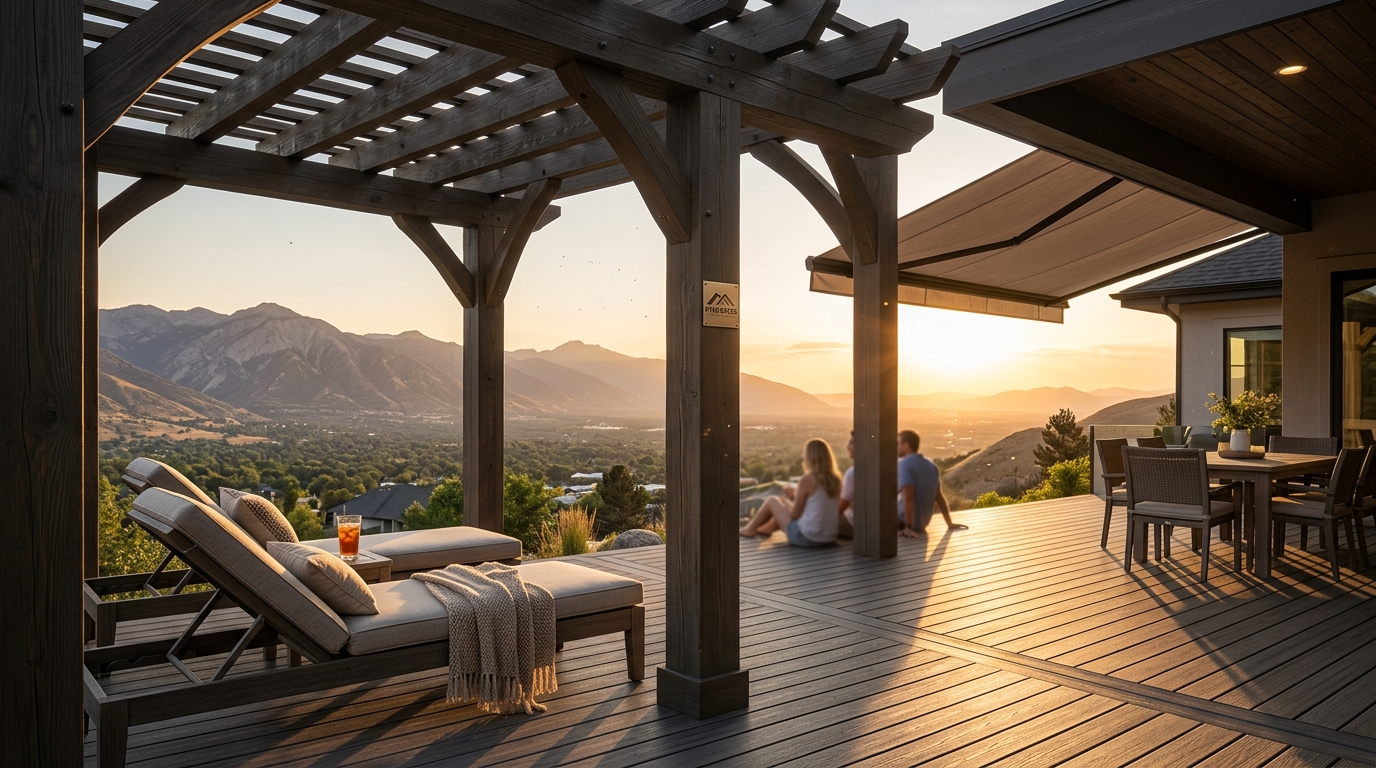
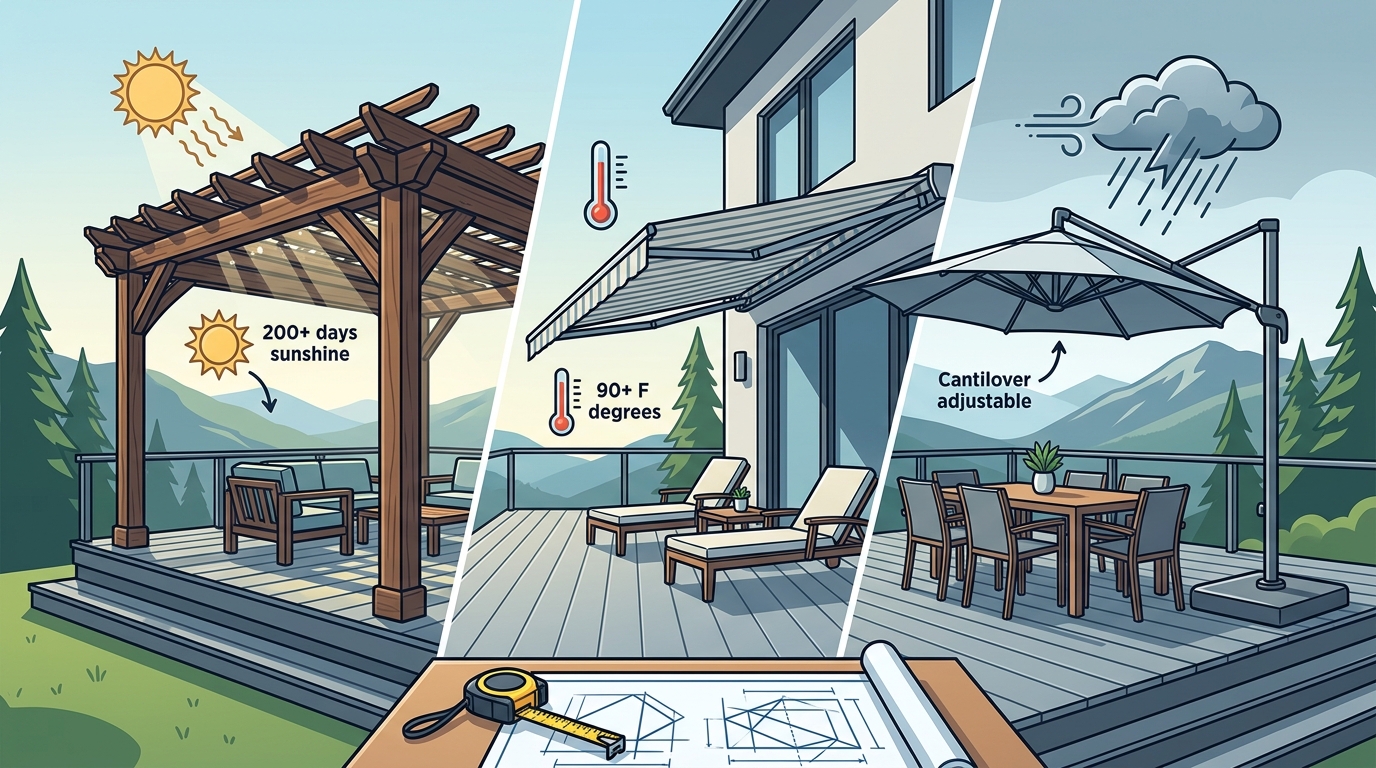
Outdoor living in Utah demands protection from intense sun and sudden mountain storms. According to recent regional climate data, Salt Lake City receives over 200 days of sunshine annually, making shade a critical component of any deck design. Utah climate reports indicate that summer temperatures frequently exceed 90 degrees Fahrenheit, directly impacting the usability of outdoor spaces. Homeowners must choose between permanent structures and flexible shading to maximize their investment.
Defining the Structures
Before selecting a cover, it is vital to understand the fundamental differences in construction and function. Each option serves a distinct purpose in outdoor architecture.
A pergola is a permanent outdoor structure characterized by vertical posts supporting a cross-helm of beams, often providing partial shade and architectural definition. These structures are typically built from wood or composite materials and are designed to last decades with minimal maintenance.
An awning is a secondary covering that extends from a wall or roof to provide shade and weather protection. Unlike permanent structures, awnings are often made from fabric or aluminum and can be fixed or retractable, offering flexibility in how much sunlight enters your space.
A cantilever cover is a shading system that extends horizontally from a central support point without requiring front legs. This design maximizes usable deck space by eliminating obstructions, making it ideal for smaller decks or areas where unobstructed views are a priority.
The Classic Pergola
Pergolas are the most traditional choice for Utah homeowners seeking to define an outdoor room. They offer a balance of sun and shade, especially when equipped with louvered roofs or climbing vines.
Architectural Impact
Pergolas add significant visual weight to a property. They create a sense of enclosure and luxury, often serving as the focal point of a backyard. At Utah Decks, we specialize in custom carpentry that integrates seamlessly with your home’s existing architecture.
Material Durability
Utah’s dry climate is gentle on wood, but UV exposure can cause fading. High-grade composite materials, such as those from Trex, resist warping and splintering. Cedar and redwood are also popular choices for their natural resistance to insects and decay.
Customization Options
Modern pergolas often include integrated lighting, ceiling fans, and even retractable canopies. These features transform a simple structure into a year-round entertainment hub. Explore our deck services to see how we incorporate these elements.
The Retractable Awning
3Retractable awnings offer a dynamic solution for homeowners who want control over their exposure to the elements. They are particularly useful in regions with variable weather patterns.
Flexibility and Control
The primary advantage of an awning is its ability to be deployed or retracted at will. On a bright morning, you can extend it for shade. On a cool evening, you can retract it to enjoy the stars. This adaptability is crucial for maximizing the lifespan of the fabric.
Wind Resistance
Utah is known for its sudden wind gusts, particularly in the spring. High-quality awnings are equipped with wind sensors that automatically retract the fabric if speeds exceed safe limits. This protects both the structure and your deck furniture. Learn more about material selection to ensure durability.
Energy Efficiency
By blocking direct sunlight from entering your home through adjacent windows, awnings can reduce cooling costs by up to 25 percent. This efficiency makes them a smart financial choice for energy-conscious homeowners.
The Cantilever Advantage
Cantilever covers, often referred to as umbrella-style structures, provide maximum flexibility in placement. They are ideal for decks where traditional posts would interfere with seating or walking paths.
Unobstructed Space
Because cantilevers do not require front legs, they leave the entire deck floor clear. This is particularly beneficial for smaller decks where every square foot counts. You can position the shade exactly where you need it, whether over a dining table or a lounge area.
Portability and Adjustment
Many cantilever systems allow for tilting and rotation. This feature ensures that the shade follows the sun throughout the day, providing consistent protection. Some models also include LED lighting for evening use.
Installation Considerations
Cantilevers require a sturdy base or mounting point. For permanent installations, we recommend anchoring them into a concrete pad or a reinforced deck structure. Improper installation can lead to instability in high winds. Contact us for a free design consultation to assess your site.
Feature Comparison
Choosing the right cover depends on your specific needs, budget, and aesthetic preferences. The following table summarizes the key differences.
| Feature | Pergola | Retractable Awning | Cantilever Cover |
|---|---|---|---|
| Permanence | Permanent Structure | Semi-Permanent | Portable or Permanent |
| Shade Coverage | Partial to Full | Full (when extended) | Targeted/Adjustable |
| Space Usage | Posts may obstruct views | Wall-mounted, saves floor space | No front posts, max space |
| Maintenance | Low (wood staining or composite cleaning) | Medium (fabric cleaning/replacement) | Low (mechanical checks) |
| Cost Range | High | Medium to High | Low to Medium |
| Best For | Architectural definition | Weather flexibility | Small decks/Targeted shade |
Utah-Specific Factors
Living in Utah presents unique challenges for outdoor structures. The high elevation and intense UV radiation require materials that can withstand harsh conditions.
UV Protection
Utah has some of the highest UV levels in the United States. Materials must be rated for high UV resistance to prevent fading and degradation. Composite decking and aluminum awnings are excellent choices for longevity. Read about our commitment to quality in our about section.
Wind and Snow Loads
Winter snow can accumulate on flat surfaces, adding significant weight. Pergolas and cantilevers must be engineered to handle these loads. Retractable awnings should be retracted during snow events to prevent damage. Local building codes in Salt Lake and Davis counties may require specific permits for permanent structures.
Seasonal Usage
Utah’s four distinct seasons mean that your deck cover must be versatile. A pergola with a retractable canopy offers the best of both worlds, providing shade in summer and openness in spring and fall. This adaptability extends the usable life of your outdoor space by several months each year.
Key Takeaways
- Pergolas offer permanent architectural value and are ideal for defining outdoor rooms.
- Retractable Awnings provide maximum flexibility and weather protection for variable climates.
- Cantilever Covers maximize usable deck space by eliminating front support posts.
- Utah Climate demands high UV resistance and wind durability in all shading structures.
- Material Choice is critical; composite and aluminum outperform traditional wood in longevity.
- Professional Installation ensures safety and compliance with local building codes.
- Custom Design allows for integration of lighting, fans, and heating for year-round use.
Frequently Asked Questions
Which is better for a small deck in Utah?
A cantilever cover is often the best choice for small decks because it provides shade without obstructing the limited floor space with posts. This maximizes the area available for furniture and movement.
Do I need a permit for a pergola in Utah?
Permit requirements vary by county. In Davis and Salt Lake counties, permanent structures often require permits. It is best to consult with Utah Decks to navigate local regulations.
How long do retractable awnings last?
High-quality awnings can last 10 to 15 years with proper maintenance. Fabric replacement may be needed sooner if exposed to intense Utah sun. Regular cleaning and retraction during storms extend their life.
Can I add lighting to a pergola?
Yes, pergolas are ideal for integrating lighting. We can install recessed LED lights, string lights, or lanterns to create ambiance and extend your evening usage.
What is the difference between a louvered and fixed pergola?
A fixed pergola has a static roof, providing consistent partial shade. A louvered pergola allows you to adjust the angle of the slats to control sunlight and ventilation, offering greater flexibility.
Are composite pergolas more expensive than wood?
Composite pergolas typically have a higher upfront cost but require less maintenance over time. Wood pergolas are cheaper initially but need regular staining and sealing to prevent rot and fading.
How do I protect my deck from winter snow?
Ensure your cover is rated for local snow loads. Retractable awnings should be retracted. For pergolas, regular snow removal is necessary to prevent structural stress.
Start Your Project
Choosing the right deck cover is a significant decision that impacts your home’s value and your daily comfort. Utah Decks offers expert guidance to help you select the perfect solution for your lifestyle. We provide free design consultations to assess your space and vision. Contact us today to schedule your inspection and transform your outdoor living area.