
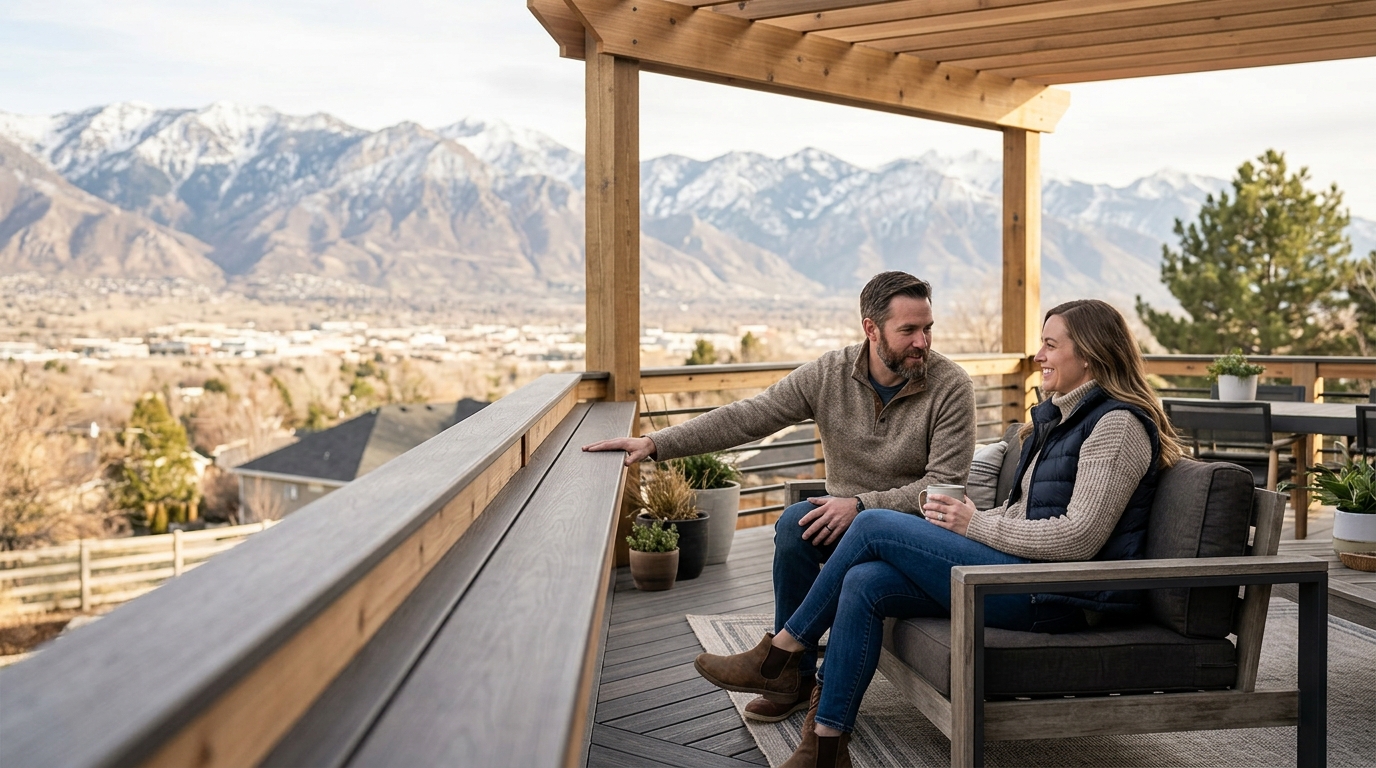
Utah's unique climate creates a brutal cycle for outdoor wood structures. Rapid snowm followed by intense UV exposure accelerates wood decay faster than in most other regions. According to industry data on material degradation in high-altitude environments, composite and wood decks in the Wasatch Front face significantly higher stress levels than national averages. This guide explains how to diagnose, repair, and prevent rot in your Utah deck.
Diagnose the Source of Deck Rot
Before you pick up a hammer, you must understand why the wood is failing. In Utah, rot is rarely just about moisture. It is a combination of freeze-thaw cycles and ultraviolet degradation. Wood rot is the decay of wood fibers caused by fungal growth that thrives in damp, shaded conditions. This process weakens the structural integrity of your deck boards, joists, and posts.
Start by inspecting the areas most vulnerable to water retention. Look at the junction where the deck meets your home's siding. This is a common entry point for snowmelt. Check the underside of the deck boards for soft spots. If your screwdriver sinks into the wood easily, the structural integrity is compromised. You must also check the ledger board, which is the critical connection point between the deck and your house. Failure here can lead to catastrophic collapse.
Utah Decks specializes in identifying these hidden issues before they become expensive emergencies. Our team conducts thorough inspections to map out the extent of the damage. We assess not just the visible rot, but the underlying framework. This comprehensive approach ensures that repairs address the root cause, not just the symptoms. Visit our services page to learn more about our diagnostic capabilities.
Understanding Snow and Ice Damage
Salt Lake City and surrounding areas receive heavy snowfall. This snow does not just sit on your deck; it melts and refreezes. Freeze-thaw cycles occur when water penetrates wood pores, expands upon freezing, and contracts upon thawing, causing micro-fractures. Over time, these micro-fractures allow more water in, accelerating the rot process.
Snow accumulation also creates a persistent damp environment. If your deck lacks proper drainage or slope, water pools in low spots. This standing water is a breeding ground for mold and rot fungi. In Utah, the rapid transition from winter to spring sun exacerbates this issue. The sun dries the surface quickly, trapping moisture inside the wood fibers.
To mitigate snow damage, ensure your deck has adequate slope for drainage. Remove snow promptly after heavy storms to prevent excessive weight and prolonged moisture exposure. Consider using deck covers or strategic landscaping to reduce snow accumulation on the structure. For professional assessment of your deck's drainage and structural health, schedule a free design consultation with our experts.
The Impact of Utah's UV Radiation
Utah is known for its high elevation and intense sunlight. UV radiation breaks down the lignin in wood, which acts as the natural glue holding wood fibers together. This process, known as photodegradation, causes wood to turn gray, crack, and become brittle. Photodegradation is the chemical breakdown of materials caused by exposure to ultraviolet light, leading to loss of strength and color.
When wood becomes brittle from UV exposure, it is more susceptible to physical damage from foot traffic and falling debris. Cracks formed by UV damage allow water to penetrate deeper into the wood, speeding up the rot process. This is why decks in Utah often show signs of both sun damage and rot simultaneously.
Composite decking materials are engineered to resist UV damage. High-quality composites include UV inhibitors that prevent fading and degradation. If you are considering a replacement, choosing a material with high UV resistance is crucial for longevity in Utah. Learn about our recommended decking materials that withstand these harsh conditions.
Step-by-Step Repair Process
Repairing a rotting deck requires careful planning and execution. Attempting DIY repairs without proper knowledge can lead to further damage or safety hazards. Here is the general process for addressing deck rot:
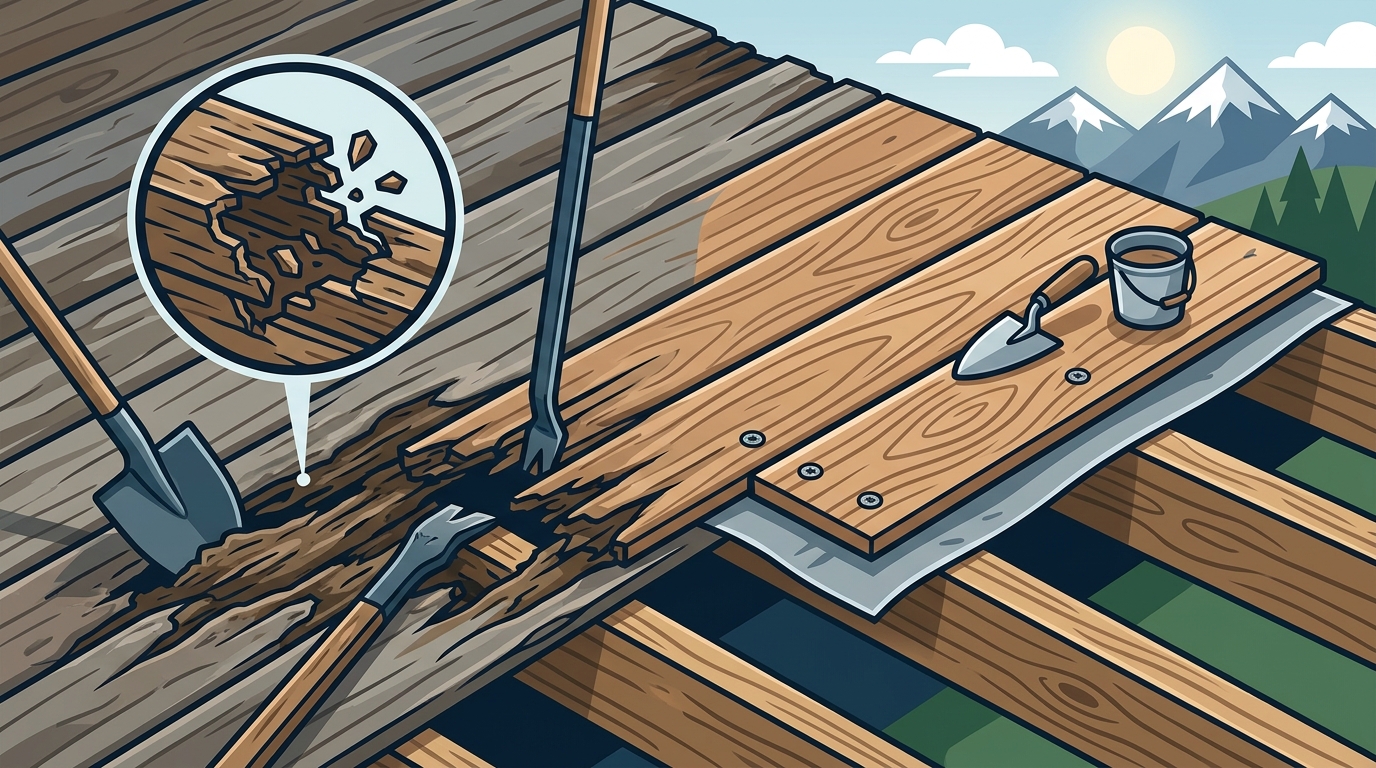
1. Assess the Damage
Identify all affected areas. Use a screwdriver to probe the wood. Mark any soft or spongy spots. Determine if the damage is isolated to surface boards or if it has reached the joists and ledger board. If the ledger board is compromised, professional help is immediately required.
2. Remove Damaged Wood
Cut out all rotted wood until you reach solid, healthy wood. Use a reciprocating saw or circular saw for precision. Ensure the cuts are clean and straight. Remove any nails or screws from the surrounding area to prevent damage to your tools.
3. Treat the Area
Apply a wood hardener or epoxy consolidant to the remaining wood edges. This helps stabilize the wood and provides a solid base for the new material. If the rot was caused by fungal growth, apply a fungicide to prevent recurrence.
4. Install New Wood
Use pressure-treated lumber or composite materials for the replacement. Ensure the new wood is properly sealed on all ends and edges. Secure the new wood with corrosion-resistant screws or nails. Use joist hangers if replacing structural members.
5. Seal and Protect
Apply a high-quality sealant or stain to the repaired area and the rest of the deck. This provides an additional layer of protection against moisture and UV radiation. Regular maintenance is key to extending the life of your deck.
For complex repairs or extensive damage, it is often more cost-effective to consider a full replacement. Utah Decks offers free deck cost estimators to help you compare repair versus replacement costs.
Material Comparison for Durability
Choosing the right material is critical for preventing future rot. Below is a comparison of common decking materials in the context of Utah's climate.
| Material Type | Rot Resistance | UV Resistance | Maintenance Level | Best For Utah Climate |
|---|---|---|---|---|
| Pressure-Treated Wood | Moderate | Low | High | Budget-conscious projects |
| Capped Composite | High | High | Low | High-traffic areas |
| PVC Decking | Very High | Very High | Very Low | High-elevation homes |
| Natural Hardwood | High | Moderate | Moderate | Aesthetic-focused designs |
Composite and PVC materials are generally recommended for Utah due to their superior resistance to both moisture and UV damage. They do not require the annual sealing that wood decks need. This makes them a lower-maintenance option for homeowners who want to enjoy their deck, not work on it. Explore our project gallery to see these materials in action.
Key Takeaways
- Utah's climate combines heavy snow and intense UV, creating a unique challenge for deck durability.
- Wood rot is caused by fungal growth that thrives in damp, shaded conditions.
- Freeze-thaw cycles expand water within wood fibers, causing micro-fractures and accelerated decay.
- Photodegradation from UV light breaks down lignin, making wood brittle and susceptible to water damage.
- Proper drainage and slope are essential to prevent water pooling and snow accumulation.
- Composite and PVC materials offer superior resistance to rot and UV damage compared to traditional wood.
- Regular inspections and maintenance can extend the life of your deck and prevent costly repairs.
Frequently Asked Questions
How do I know if my deck is structurally sound?
Check the ledger board, joists, and posts for soft spots, discoloration, or sagging. If you notice any movement or hear creaking sounds, it may indicate structural issues. Professional inspection is recommended for safety.
Can I repair rotting wood without replacing it?
Minor surface rot can be repaired with wood fillers and epoxy consolidants. However, structural rot in joists or ledger boards usually requires replacement to ensure safety and stability.
What is the best deck material for Utah's climate?
Capped composite and PVC decking are generally the best options due to their high resistance to both moisture and UV radiation. They require minimal maintenance and offer long-term durability.
How often should I seal my wood deck?
Wood decks should be sealed every one to two years, depending on exposure and wear. Regular sealing helps protect against moisture and UV damage, extending the life of the wood.
Why does my deck rot so quickly in Utah?
Utah's rapid snowmelt and intense sun create a cycle of wet and dry conditions that accelerate wood decay. Poor drainage and lack of maintenance can exacerbate this issue.
Is it safe to walk on a rotting deck?
No, walking on a rotting deck is dangerous. The structural integrity is compromised, and it could collapse under weight. Avoid using the deck until it has been inspected and repaired.
How much does it cost to replace a rotting deck in Utah?
Costs vary based on size, materials, and complexity. Composite decks typically cost more upfront but offer lower maintenance costs over time. Contact us for a free cost estimate.
Can I install a new deck over an existing one?
It is generally not recommended to install a new deck over an old, rotting one. The underlying structure must be sound to support the new deck. Removal of the old deck is usually necessary.
Schedule Your Free Design Consultation
Don't let rot ruin your outdoor living space. Utah Decks is here to help you diagnose, repair, or replace your deck with high-quality materials and expert craftsmanship. We serve the greater areas of Davis, Salt Lake, and Utah counties. Our team is committed to delivering high standards and high integrity on every project. Schedule your free design consultation today to get started on your deck project.