
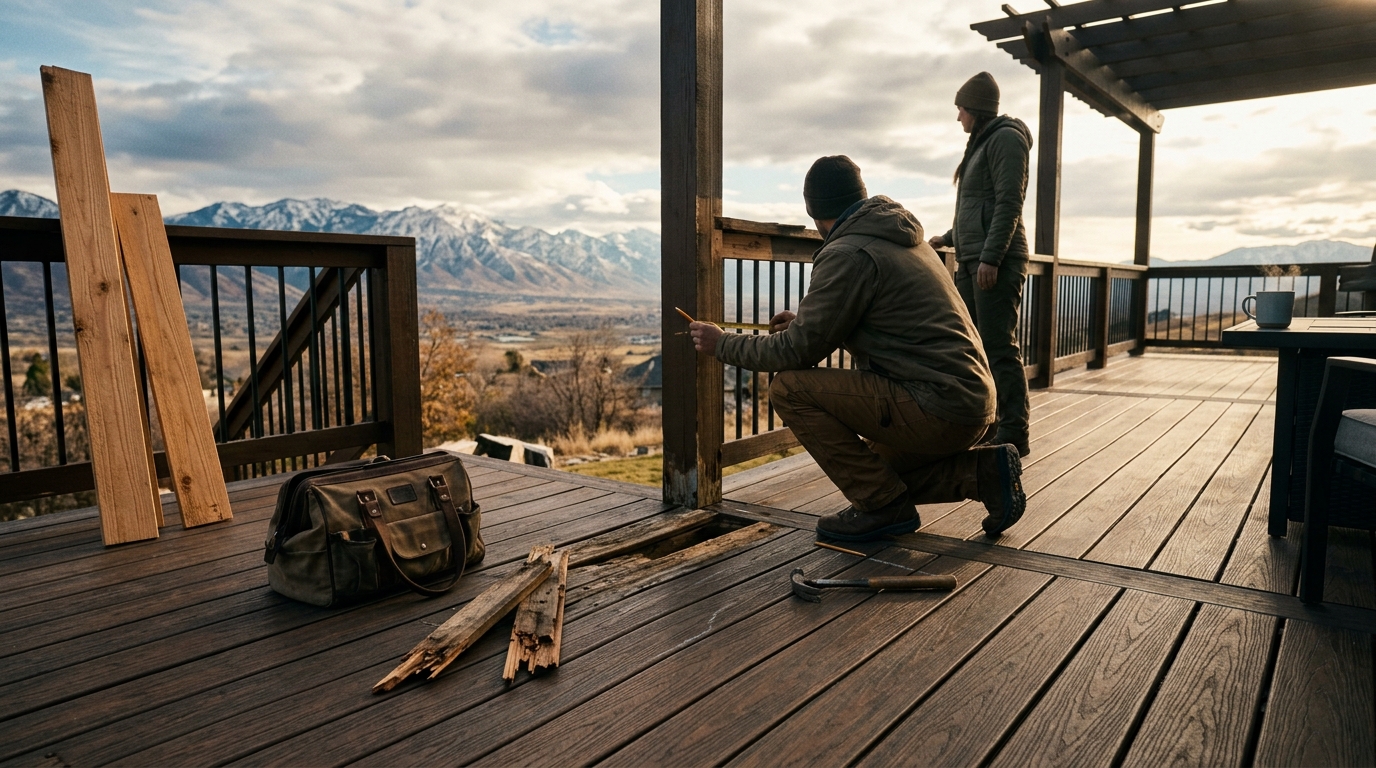
Utah’s unique climate creates a brutal environment for outdoor wood structures. The combination of intense high-elevation UV radiation and heavy winter snow loads accelerates wood degradation faster than in most other regions. According to industry data on material longevity, untreated wood decks in high-UV zones can lose structural integrity up to 40% faster than those in moderate climates. If your deck is showing signs of rot, immediate intervention is required to prevent safety hazards and costly full replacements. This guide details how to diagnose, repair, and protect your outdoor space against Utah’s extreme weather patterns.
Step 1: Diagnose the Type and Extent of Rot
Before picking up a tool, you must understand what you are dealing with. Rot is not a single condition. It is a biological process where fungi break down the cellulose in wood. In Utah, two primary types of rot are prevalent due to the freeze-thaw cycles and UV exposure.
White rot is a type of fungal decay that breaks down lignin, leaving the wood stringy and white. This type of rot is common in areas where moisture is trapped, such as under deck railings or near house siding. Brown rot is more destructive to structural integrity. It breaks down cellulose, leaving the wood brittle, cracked, and brown. Brown rot is often found in joists and beams that have been exposed to snow melt without proper drainage.
To diagnose the extent of the damage, use a screwdriver or an awl. Press the tip into the wood. If it sinks in easily, the wood is compromised. If the wood feels hard and resists penetration, the structural integrity is likely still sound. Pay close attention to the ledger board, which connects your deck to your home. This is the most critical failure point in Utah homes because it is exposed to both roof runoff and ground moisture.
Utah Decks specializes in identifying these hidden failures before they become catastrophic. We recommend a professional inspection if you suspect the rot extends beyond the surface boards. Visit our Contact Us page to schedule a preliminary assessment.
Step 2: Safety Preparations and Tool Setup
Deck repair involves heavy materials and power tools. Safety is the first step in any successful repair project. Ensure you have the following equipment ready before beginning work.
- Personal Protective Equipment (PPE): Safety glasses, heavy-duty work gloves, and a dust mask. Rotting wood often contains mold spores and fungal particles that are hazardous when inhaled.
- Power Tools: A cordless drill/driver, an oscillating multi-tool for precise cuts in tight spaces, and a circular saw for longer cuts.
- Hand Tools: Pry bars, a hammer, a chisel, and a reciprocating saw (Sawzall) for removing nails and screws that are rusted or stripped.
- Replacement Materials: Pressure-treated lumber (PT), composite decking, or PVC boards. For Utah’s climate, composite or PVC is often recommended for its resistance to UV fading and moisture absorption.
Clear the deck of all furniture, planters, and debris. If the rot is severe, do not stand on the deck until you have verified the structural stability of the joists. If the joists are compromised, you must shore up the deck from below before proceeding.
Step 3: Removing Damaged Wood Components
Once you have identified the damaged areas, the next step is removal. You cannot simply cover up rot. The fungal spores will continue to spread if the source is not eliminated.
Removing Deck Boards: Start by removing the boards closest to the damaged area. Use a pry bar to lift the boards. If they are nailed, use the claw end to pull them out. If they are screwed, use a drill to remove the screws. Be careful not to damage the adjacent healthy boards. Label each board with masking tape so you know its original position if you plan to reuse them, though replacement is usually safer.
Removing Rotted Joists: If the rot has reached the joists, you must remove the damaged sections. Use a reciprocating saw to cut through the nails or screws holding the joist to the ledger board or beam. Cut the joist into manageable sections. Remove the rotted pieces carefully. If the joist is only partially rotted, you can sister a new piece of lumber alongside the old one. Sistering involves bolting a new, clean joist next to the damaged one to share the load.
For detailed guidance on structural repairs, review our Services page to understand the scope of professional deck restoration.
Step 4: Structural Framing and Joist Repair
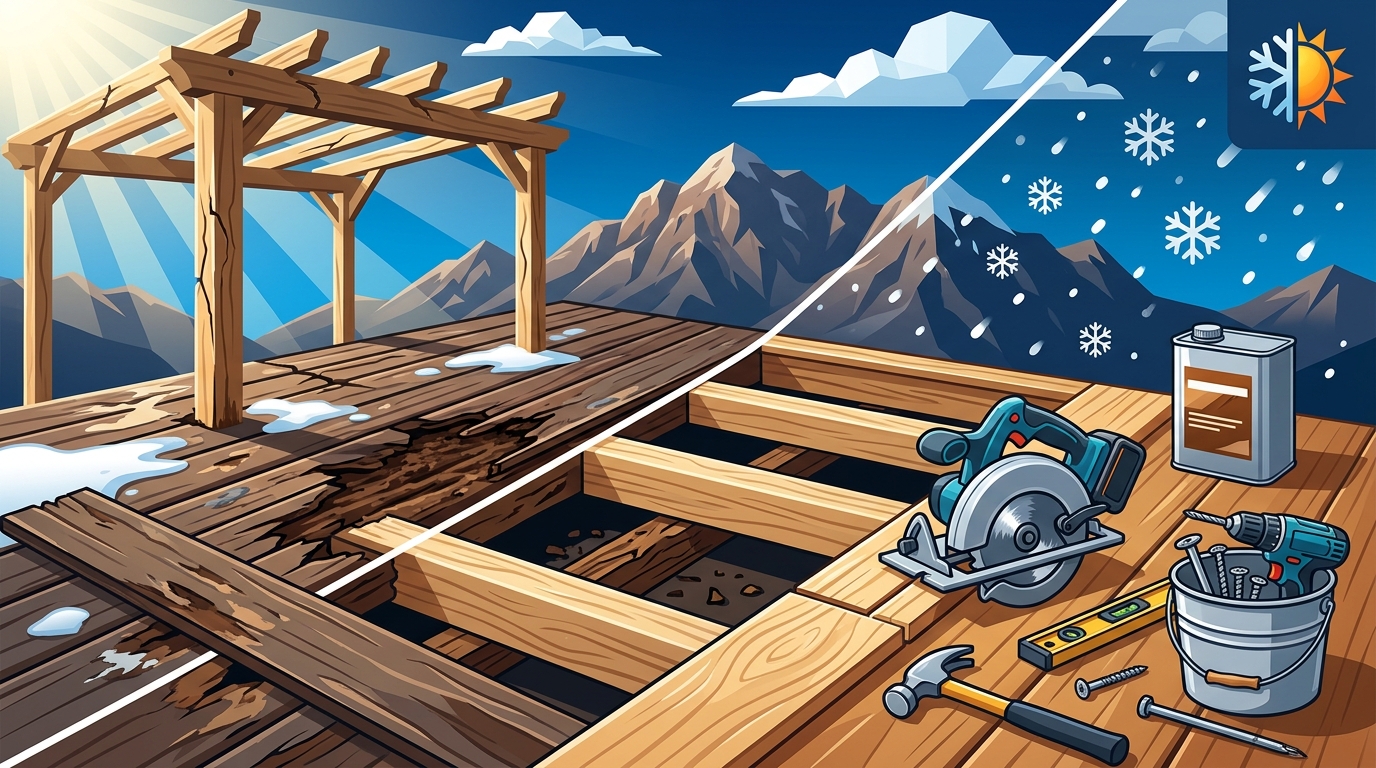
Structural integrity is non-negotiable. Utah’s heavy snow loads can exceed 50 pounds per square foot in some areas. Your deck must be able to support this weight even when the wood is wet and heavier.
Sistering Joists: If the joist is only partially rotted, sistering is the most effective repair. Cut a new piece of pressure-treated lumber to the same length as the damaged joist. Apply a generous amount of construction adhesive to the face of the new lumber. Bolt it to the existing joist using 3/8-inch carriage bolts spaced every 12 inches. This creates a unified structural member that can handle the load.
Replacing Ledger Boards: The ledger board is the most critical component. If it is rotted, the entire deck is at risk of collapsing. Remove the old ledger board by cutting the bolts or screws. Clean the rim joist of your home thoroughly. Apply a fresh layer of waterproof flashing tape or membrane. Install a new pressure-treated ledger board using structural bolts (not lag screws) and secure it with proper flashing to direct water away from your home. This step is crucial for preventing future rot at the house connection.
If you are unsure about the structural capacity of your deck, consult with a licensed contractor. Utah Decks provides Free Deck Design consultations to help you plan structural upgrades that meet local building codes.
Step 5: Surface Restoration and Board Replacement
With the structure secure, you can focus on the surface. This is where you can improve the deck’s resistance to Utah’s sun and snow.
Choosing Materials: For Utah’s high UV index, traditional wood requires constant sealing. Composite decking, such as Trex or TimberTech, offers superior UV resistance and does not rot. PVC decking, like Azek, is 100% synthetic and provides the highest level of moisture and fade resistance. These materials are ideal for Utah homeowners who want to avoid future rot issues.
Installing New Boards: Start installing the new boards from the farthest point from the house. Use the same spacing as the original boards. Secure the boards with corrosion-resistant screws (stainless steel or coated). Ensure each board is straight and level. Use a spacers to maintain consistent gaps for drainage and expansion.
Finishing Touches: Install new railings and posts if they were damaged. Ensure all metal hardware is stainless steel or hot-dipped galvanized to prevent rust stains and structural failure. Apply a wood preservative to any new pressure-treated wood before sealing it.
Explore our Materials page to compare the best options for your specific climate and budget.
Step 6: Preventative Care for Utah Climates
After repairing your deck, preventative care is essential to extend its lifespan. Utah’s climate demands a proactive approach to maintenance.
Regular Cleaning: Clean your deck at least twice a year. Remove snow and ice promptly to prevent water from seeping into the wood. Use a deck cleaner to remove mold and mildew. Avoid pressure washing on high settings, as it can damage the wood fibers.
Sealing and Staining: If you use wood decking, apply a high-quality sealant or stain every 1-2 years. Look for products with UV inhibitors to protect against sun damage. Ensure the wood is completely dry before applying any sealant.
Inspection: Inspect your deck annually. Look for signs of rot, loose hardware, and splintering wood. Address small issues immediately to prevent them from becoming large, expensive problems.
For professional maintenance and restoration services, contact Utah Decks at hello@utahdecks.co or call (385) 396-7380.
Key Takeaways
- Climate Impact: Utah’s high UV index and heavy snow loads accelerate wood rot, requiring specialized materials and maintenance.
- Diagnosis: Use a screwdriver to test wood hardness. White rot affects lignin, while brown rot destroys cellulose and structural integrity.
- Critical Component: The ledger board is the most vital structural element. Its failure can cause total deck collapse. Always use structural bolts and proper flashing.
- Material Choice: Composite and PVC decking offer superior resistance to Utah’s sun and moisture compared to traditional wood.
- Sistering: Sistering new joists to rotted ones is a cost-effective repair for partial structural damage.
- Maintenance: Regular cleaning and sealing are essential for wood decks. Composite decks require minimal maintenance.
- Professional Help: Structural repairs should be handled by experienced contractors to ensure safety and code compliance.
Frequently Asked Questions
How do I know if my deck joists are rotted?
Inspect the joists from below or by removing a few deck boards. Look for discoloration, soft spots, or crumbling wood. If a screwdriver sinks in easily, the joist is likely rotted and needs repair or replacement.
Can I fix a rotted ledger board myself?
While it is possible, it is risky. The ledger board supports the entire deck. Improper installation can lead to collapse. It is recommended to hire a professional contractor for this critical repair.
What is the best deck material for Utah’s climate?
Composite and PVC decking are the best options for Utah. They resist UV fading, moisture absorption, and rot better than traditional wood, making them ideal for the state’s extreme weather.
How often should I seal a wood deck in Utah?
Wood decks in Utah should be sealed every 1-2 years. Regular sealing protects the wood from UV damage and moisture, preventing rot and splintering.
What causes deck rot in Utah?
Deck rot is caused by fungal growth that thrives in moist environments. Utah’s snow melt, rain, and high humidity provide the moisture, while the sun can cause cracks that allow water to penetrate the wood.
How much does it cost to repair a rotted deck?
Costs vary based on the extent of the damage. Minor repairs may cost a few hundred dollars, while major structural repairs can cost thousands. Utah Decks offers Free Deck Cost Estimator tools to help you plan your budget.
Can I use a pressure washer to clean rotting wood?
Pressure washing can remove surface mold but may damage the wood fibers, making them more susceptible to future rot. Use a low-pressure setting and a deck cleaner specifically designed for your wood type.
Schedule Your Free Design Consultation
Don’t let rot compromise your outdoor living space. Utah Decks is dedicated to building decks that withstand the state’s extreme weather. Our team of experts provides high-quality craftsmanship and integrity in every project. Contact us today to schedule your Free Deck Design consultation and start enjoying your outdoor space again.